
Recommended
The first year of the second Trump administration has seen a broad assault on global flows of goods, services, finance, and people, with an outsize impact on low- and middle-income countries. As a side effect of some of these policies and the direct intent of others, these actions have had a particularly large impact on women.
Aid
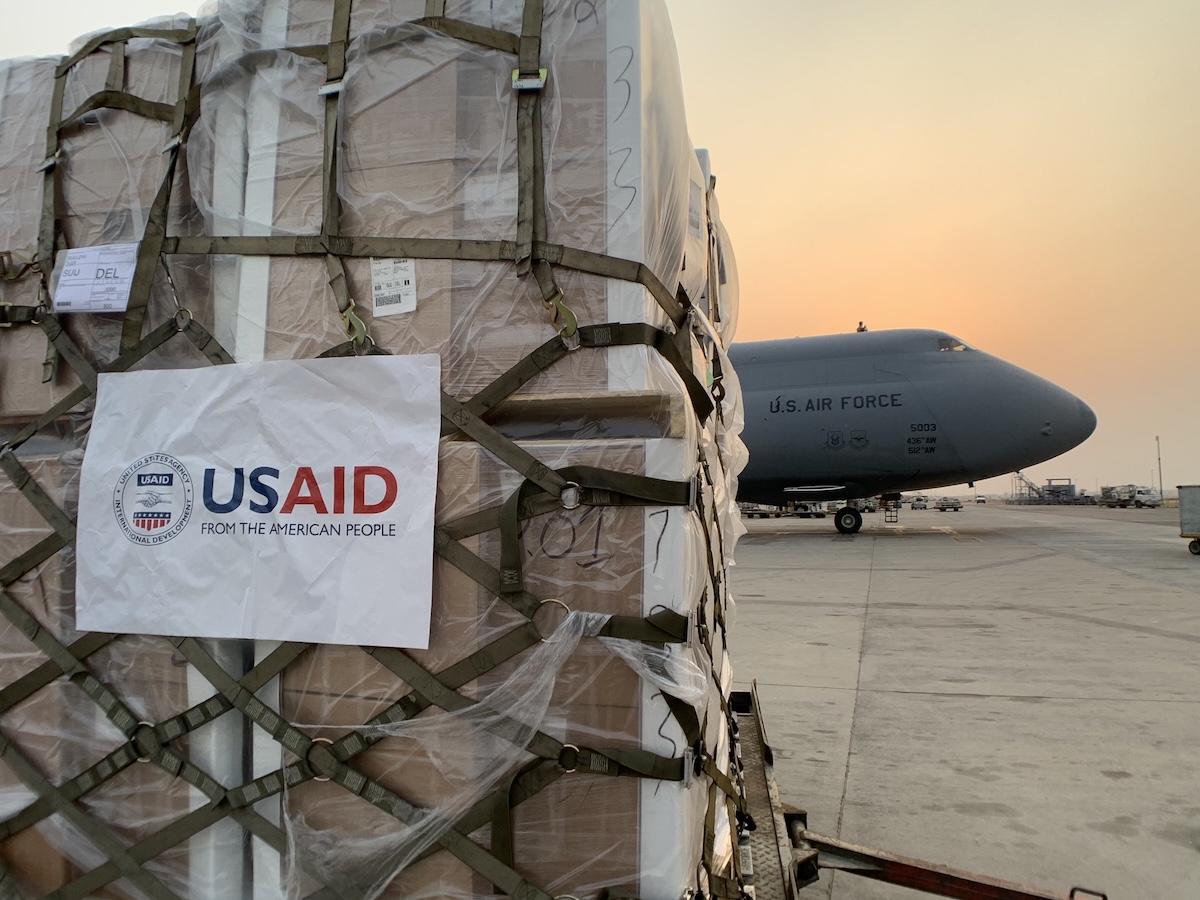
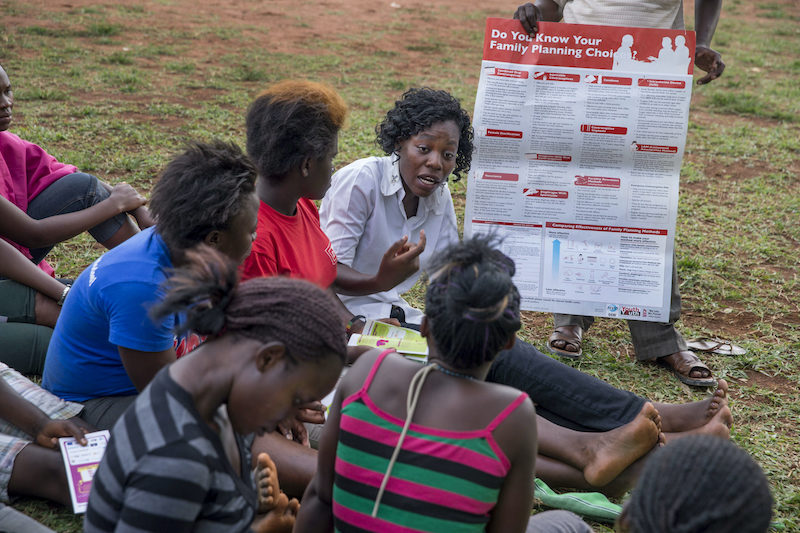
Compared to an overall estimate of a 38 percent cut to USAID funded activities in March, cuts to maternal and child health alongside family planning and reproductive health were above 90 percent. US family planning funding provided 47.6 million women with modern contraceptives, preventing 17 million unintended pregnancies and 34,000 pregnancy-related deaths. In addition, USAID programming for maternal and child health supported 16.8 million pregnant women annually.
In addition, the administration reinstated the expanded version of the Mexico City Policy or “global gag” rule in January 2025, restricting foreign organizations from providing or discussing abortion, with funds from any source, as a condition for receiving US global health assistance. Recent reports indicate the administration may try to expand this rule to apply more broadly, including to multilateral organizations and even governments, while removing exceptions for humanitarian support.
Outside of health, programs connected to women’s empowerment and gender-based violence have also been amongst the most eviscerated. For example, the administration cut $2.5 million for programs aimed at reducing and responding to sexual and gender-based violence in Haiti, and $20 million for victims of gender-based violence in Venezuela. Cuts extended worldwide including to work in war zones including South Sudan and Yemen.
Migration, refugees, and trafficking
Women and girls account for an estimated two thirds of global trafficking victims. The administration cancelled $500 million in grants to 69 programs combatting trafficking, child and forced labor in more than 40 counties, while also slashing domestic support for people who have been trafficked into the US. In addition, the Department of Homeland Security has eliminated protections for women's shelters, giving undocumented women facing abuse within the US the choice between seeking safety and risking deportation.
With regard to refugees, the administration has overturned decades of precedent in now stating that for women and girls, being subject to violence on account of their gender identity is no longer sufficient for an asylum claim.
More broadly, efforts to reduce all forms of migration into the US alongside the new tax on remittance flows have gendered impacts not least because available evidence suggest women are over-represented as remittance recipients (accounting for about two thirds of recipients in Latin America, for example). Women also tend to be more reliant on remittances for income than male recipients, linked to greater household and caregiving responsibilities. That suggests lower remittances may be a force for further gender inequality in consumption. (On the sending side, while women typically earn less than men and pay more in transfer fees, the average remittance amounts they send are the same as or even greater than those of men, suggesting the new remittance tax will have a disproportionate impact.)
Trade
Early evidence suggested that textiles imports were some of the most heavily affected by the administration’s tariffs (in that countries that exported textiles to the US faced particularly large “reciprocal” tariffs). That suggests recent US trade policy has disproportionately impacted women, who comprise the majority of textile workers.
For example, even though the administration was apparently unaware of the country’s existence, US tariffs have already wrecked the livelihoods of thousands of women working in Lesotho's textile sector: over half of the 12,000 workers manufacturing for the US market were left without pay, and many of them were simply fired. Similarly, Haiti’s textile exports to the US are responsible for 70 percent of total exports of all the country’s goods to any destination. The combination of expiring trade preferences and “reciprocal” tariffs have shattered the industry, where 69 percent of employees were women.
Major textile exporters to the US, women’s share of textile employment and tariff rates
| Country | Textile exports to US as % total exports | % Textiles workers who are women | US tariff rate as of August 7th, 2025 (%) |
|---|---|---|---|
| Guatemala | 10% | 61% | 10% |
| Lesotho | 10% | 77% | 15% |
| Cambodia | 12% | 76% | 19% |
| Jordan | 13% | 5% | 15% |
| Sri Lanka | 14% | 70% | 20% |
| Bangladesh | 15% | 32% | 20% |
| Honduras | 16% | 53% | 10% |
| Nicaragua | 16% | 90% | 18% |
| El Salvador | 19% | 45% | 10% |
| Haiti | 70% | 69% | 10% |
Sources for labor share International Labor Organization, except for Nicaragua and Haiti: https://www.somo.nl/wp-content/uploads/2011/04/Gender-aspects-in-the-Latin-American-garment-industry.pdf, for trade data https://dataweb.usitc.gov/trade/search/GenImp/HTS, for tariffs: https://www.cgdev.org/media/us-tariff-tracker-measuring-effective-tariff-rates
Haiti is a good illustration of why the International Monetary Fund used to claim that gender was a “macrocritical” issue. But the IMF is less likely to say such things today under pressure from the US administration, which suggested a focus on gender was part of “mission creep” for the organization. It is a broader sign of a rollback that includes proposing the closure of the Gender and Women's Issues (GWI) office at the State Department, rejoining the Geneva Consensus Declaration, and ending all funding to UN Women.
While the first Trump administration reinstated and expanded the Mexico City rule and coordinated the Geneva Consensus declaration, there were also bright spots: then-Senator Marco Rubio cosponsored and President Trump signed into law the Women Peace and Security Act, and the administration championed women’s economic empowerment through initiatives including W-GDP, We-FI, and 2X. Sadly, so far there have been no similar silver linings for global gender equality from the second Trump administration.
Topics
DISCLAIMER & PERMISSIONS
CGD's publications reflect the views of the authors, drawing on prior research and experience in their areas of expertise. CGD is a nonpartisan, independent organization and does not take institutional positions. You may use and disseminate CGD's publications under these conditions.
Thumbnail image by: njbfoto/ Adobe Stock