
Recommended
For more than two decades, the US President’s Emergency Plan for AIDS Relief (PEPFAR) has been one of the most successful global health investments in history. Since 2003, it has helped save an estimated 26 million lives, supported 21 million people on antiretroviral treatment, and prevented millions of infants from acquiring HIV at birth. Its model—centering high-burden countries, accelerating treatment coverage, funding community delivery systems, and supporting prevention programs—had a meaningful impact on how the HIV epidemic played out globally, especially in sub-Saharan Africa.
PEPFAR now faces arguably the most precarious moment in its history. Sweeping terminations of USAID-funded awards in 2025, shifts in U.S. foreign aid priorities, and delays in public data reporting have disrupted service delivery on an unprecedented scale. Work by Ramona Godbole suggests that roughly 65 percent of PEPFAR’s USAID awards for FY2025 were terminated, leaving entire categories of prevention, community support, and child services at risk. At the same time, maternal and child health, reproductive health, and gender-based violence programs—lifelines for women and girls—have faced some of the steepest aid cuts across the U.S. global portfolio. But if we are to “safeguard its legacy,” as our colleagues Rachel Bonnifield and Janeen Madan Keller eloquently put it, we must understand who it has served thus far.
In this blog, we use PEPFAR’s monitoring data for 2024—the last year made publicly available—to delve into who and how many PEPFAR served. We use PEPFAR’s Public Partner (MER) and Operating Unit (OU) by fine age and sex datasets to aggregate the 2024 reported totals of people who received services by funding agencies and demographic information respectively, relying on the World Bank’s regional designations. The MER dataset provides service data at the funding agency and partner level, broken down by gender and basic age categories, while the OU dataset provides finer but less complete disaggregations by age. For estimates of the number of people newly enrolled on PrEP, we examined only fourth quarter figures. For all others, we produced annualized figures by summing across all four quarters or fourth quarter cumulative totals where appropriate.
As Table 1 shows, PEPFAR provided antiretroviral therapy (ART)—a potentially lifesaving treatment of HIV—to 20.4 million individuals in 2024, with 36 percent of these being funded by USAID. It also provided 8.8 million HIV self-test kits—48 percent funded by USAID; 83 million clinic-based tests with results—about 39 percent funded by USAID; and 2.6 million new enrollments on preventative HIV care (PrEP), 47 percent funded by USAID.
Table 1. 2024 PEPFAR estimates by region
2024 PEPFAR estimates by region | |||||
|---|---|---|---|---|---|
| World Bank region | Currently receiving ART | HIV self-test kits distributed | Received HIV testing services & results | Girls/women completed primary DREAMS* package | Newly enrolled on PrEP |
| East Asia & Pacific | 281,143 | 65,321 | 667,851 | 56,785 | |
| Europe & Central Asia | 153,239 | 119,093 | 2,362,63 | 10,379 | |
| Latin America & Caribbean | 308,407 | 81,733 | 870,223 | 36,971 | 34,586 |
| South Asia | 457,880 | 15,841 | 157,627 | 6,497 | |
| Sub-Saharan Africa | 19,232,740 | 8,565,378 | 81,362,184 | 1,826,542 | 2,456,991 |
| Total | 20,433,409 | 8,847,366 | 83,294,148 | 1,863,513 | 2,565,238 |
| Share of results achieved by USAID | 36% | 48% | 39% | N/A | 47% |
* Determined, Resilient, Empowered, AIDS-free, Mentored, and Safe
PEPFAR provided treatment and prevention services to 14.4 million women in 2024
PEPFAR data highlight its reach among the most vulnerable: women represent the largest share of individuals served, with more than 14.4 million women receiving HIV treatment services, 12.8 million on ART, and 1.6 million starting PrEP—relative to 6.7 million men receiving ART. These numbers included over 630,000 pregnant women receiving ART in 2024 and just under a million male new recipients of PrEP. These figures reflect the role of PEPFAR in supporting maternal health, testing, counseling, and prevention of mother-to-child transmission. Given that women—especially women of childbearing age—face higher HIV exposure risk, social vulnerability, and disproportionate caregiving roles, the large share of women among recipients of PEPFAR-supported services underscores how deeply gendered the consequences of any disruptions or cutbacks will be.
Figure 1. Number of people who received ART in 2024 under PEPFAR

Figure 2. Number of people who started PrEP in 2024 under PEPFAR

PEPFAR also served over half a million children
The data also show the staggering vulnerability of children: 562,000 children received ART, of whom 98 percent live in sub-Saharan Africa. Pediatric HIV care is uniquely fragile with infants and children requiring specialized drug formulations, more frequent monitoring, and nutritional and psychosocial support. Without uninterrupted treatment, viral rebound and rapid health decline are common among infants—and mortality without such treatment and support can be seven times higher among infected infants than among uninfected infants.
Figure 3. Number of children who received ART in 2024 under PEPFAR

Figure 4. Number of children who received ART in 2024 under PEPFAR

With USAID program terminations threatening over half of planned services for orphans and vulnerable children, these data show that hundreds of thousands of children are suddenly placed in jeopardy.
Any disruptions to PEPFAR will hit sub-Saharan Africa hardest
PEPFAR’s geographic footprint is well known, but the numbers reveal just how concentrated its impact remains in sub-Saharan Africa. The data show that 12.3 of the 12.8 million women and 549,000 of the 562,000 children who received ART through it in 2024 are in sub-Saharan Africa. Such a dependency, if destabilized, could trigger regional setbacks in HIV control within months. In an interconnected world, this is not only a regional security risk but a global one.
Figure 5. Number of people who received ART in 2024 under PEPFAR

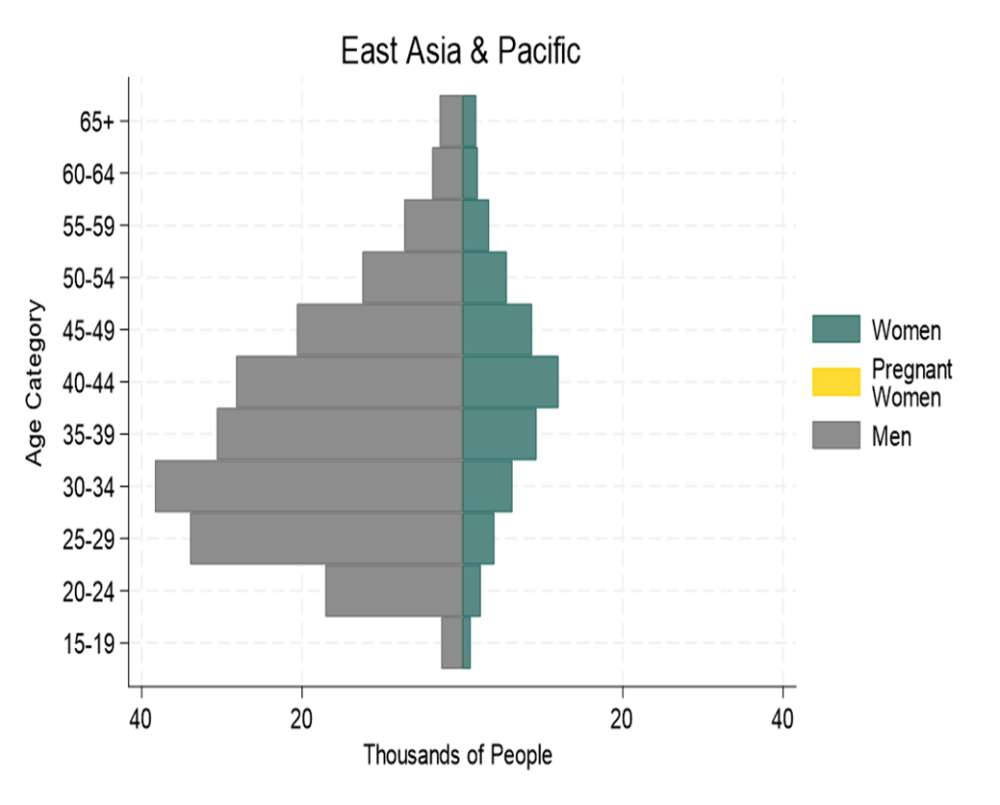
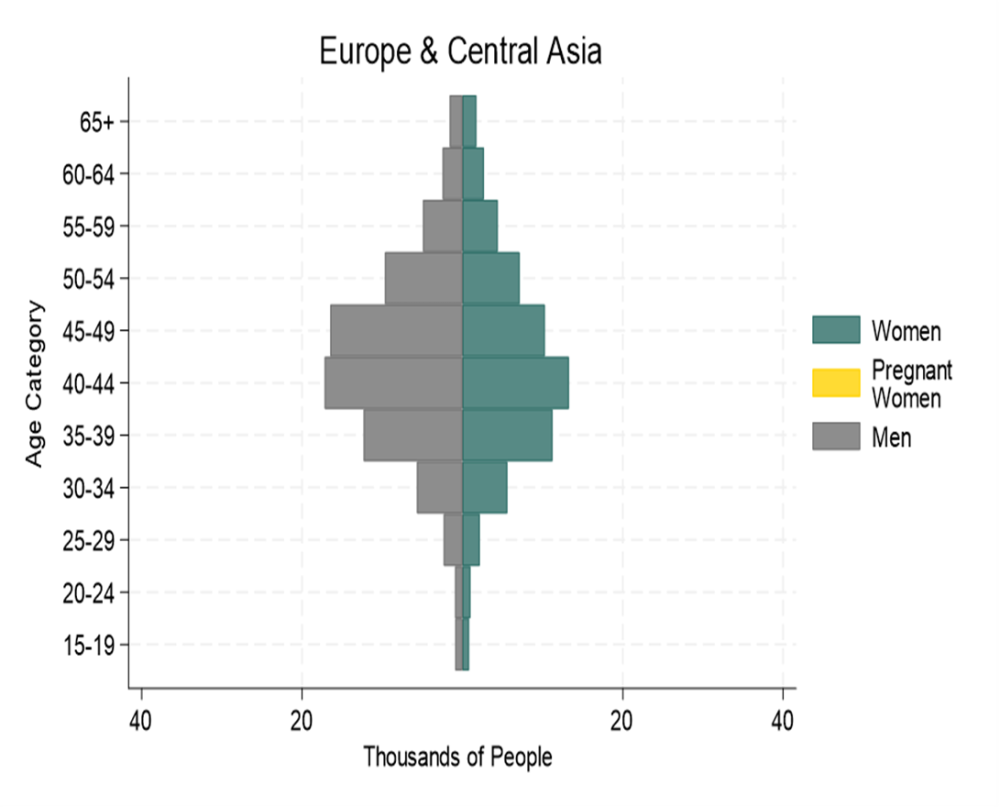
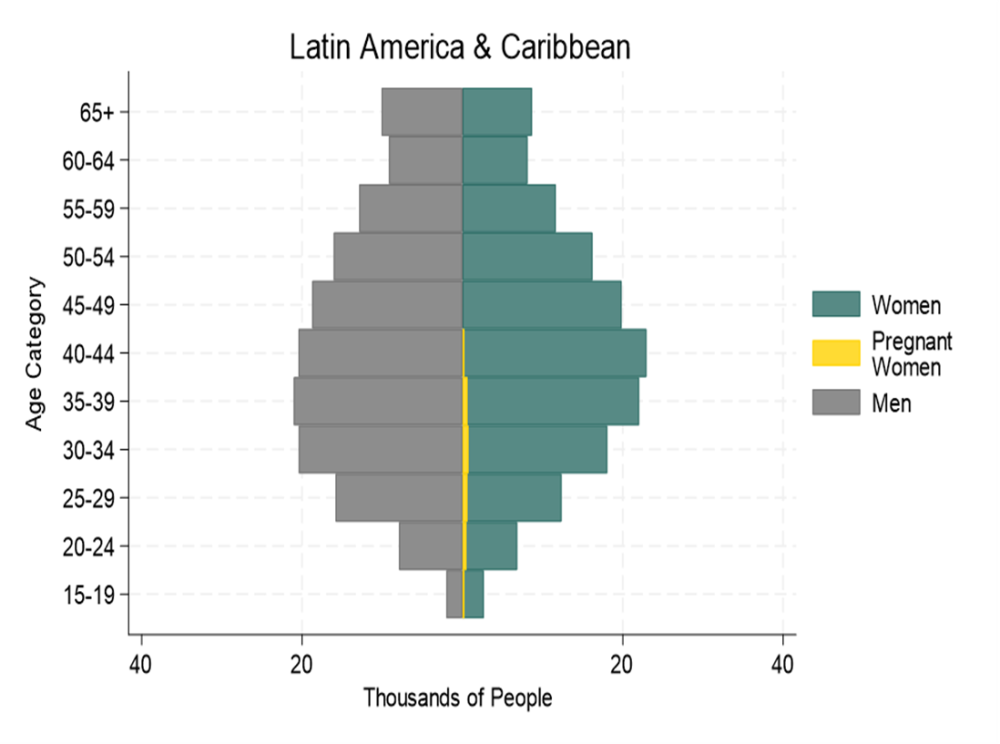
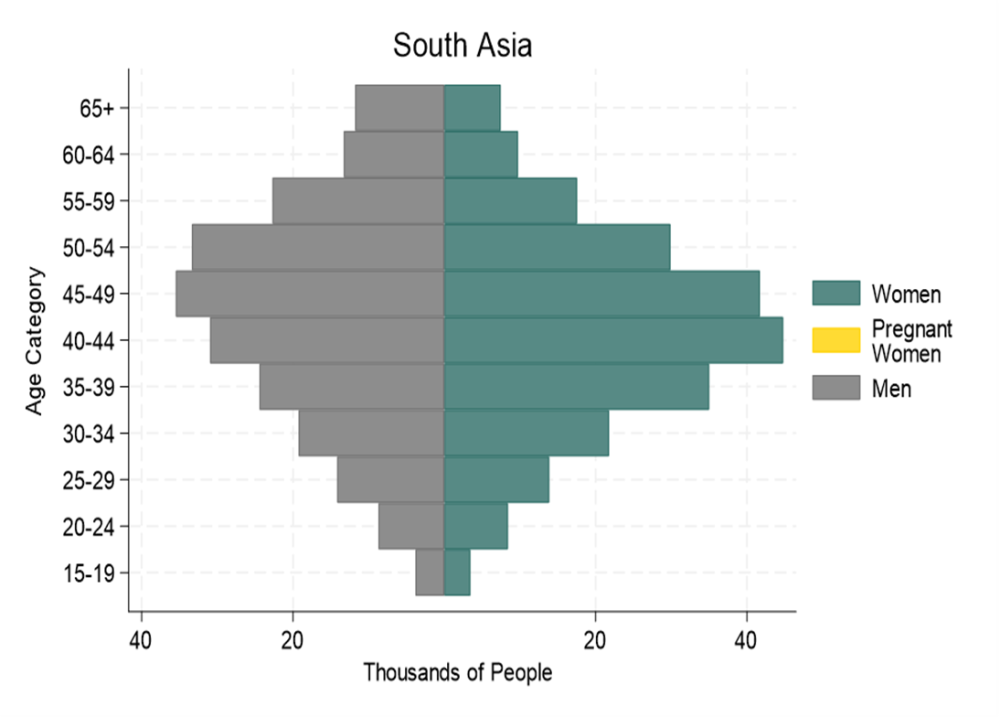
But even in other regions—East Asia and the Pacific, Europe and Central Asia, Latin America and the Caribbean, and South Asia—PEPFAR support provided ART to tens of thousands of men and women. Interestingly, it provided ART to more men than women in East Asia and the Pacific, while in the other three regions, women remain the largest recipient group. These trends reflect how concentrated the HIV epidemic is in sub-Saharan Africa and the persistently disproportionate vulnerability of women and children.
Figure 6a-6d. Number of people who received ART in 2024 under PEPFAR
| 
|
| 
|
A crossroads: what must happen now
These realities call for a transition strategy that places human lives—not bureaucratic or political needs—at the center. Structural shifts may be necessary, and in some cases beneficial, but unmanaged disruption carries severe human costs. Recent proposals for a differentiated, three-track transition—ranging from rapid graduation for wealthier countries to long-term, compassionate support for fragile states—offer a pragmatic starting point. Yet any transition must be grounded in disaggregated data that show who is most dependent and which services are most irreplaceable.
Above all, transition plans must protect the groups the data show are most affected: women, pregnant women, adolescent girls, infants, and children. Cuts to maternal and reproductive health services, community prevention, PrEP enrollment, and child support programs are not neutral policy shifts; they have immediate and often irreversible consequences for groups already navigating deep social and structural vulnerabilities.
What the numbers represent
Behind the data are human beings: women protecting their lives and their pregnancies, children relying on daily treatment to stay alive, families whose stability depends on schooling, nutrition, and psychosocial support wrapped around HIV care. These numbers are not abstract indicators; they are a reflection of lives built over years of progress—and lives that could unravel quickly under policy and funding shocks.
As PEPFAR enters its next chapter, the lives of millions of women and children hang in the balance. The question is not whether PEPFAR will change, but whether its evolution will uphold the dignity, rights, and survival of those who depend on it. The answer will define the legacy of one of the most successful global health programs ever created—and determine whether its impact endures precisely when it is needed most.
With thanks to Ramona Godbole and Charles Kenny for helpful discussions and feedback.
Note: Table 1 was updated on Dec. 12, 2025 to reflect the fact that the MERS and OU data do not allow us to calculate an accurate share of USAID funding allocated to DREAMS. We thank Damilola Walker for making us aware of this discrepancy and to Ramona Godbole for helping us understand how to resolve it. In future work, we hope to revisit the question of USAID funding for programming targetting adolescent girls and young women, including through the DREAMS package.
Topics
DISCLAIMER & PERMISSIONS
CGD's publications reflect the views of the authors, drawing on prior research and experience in their areas of expertise. CGD is a nonpartisan, independent organization and does not take institutional positions. You may use and disseminate CGD's publications under these conditions.
Thumbnail image by: Poco_bw/ Adobe Stock