

Recommended
Blog Post
How Has the IMF Engaged on Health Taxes?

WORKING PAPER
Estimating Health Tax Capacity, Effort, and Potential
Many sub-Saharan African (SSA) countries collect less than 15 percent of GDP in tax revenue—a level widely regarded as the minimum threshold for sustained growth and effective state capacity. Falling below this point often signals deeper structural challenges: weak institutions, limited fiscal space, and persistent reliance on external aid. Today, roughly two-thirds of SSA economies—34 out of 49 countries—remain below this threshold, with average tax revenue hovering around 10 percent of GDP. At such low levels, governments struggle to finance even basic public services without continued dependence on foreign support.
These low tax ratios come at a time when governments face rising demands for investment in infrastructure, climate transition, and expanding social services, all driven by rapid population growth and demographic change. Worryingly, many of these countries collecting less than 10 percent of GDP in tax revenue have made little progress over time. Given that traditional, broad-based tax reforms are often politically and administratively difficult to implement quickly, health taxes (taxes on products like tobacco, alcohol, and sugary drinks) emerge as one of the few realistic near-term options for many governments seeking to boost revenue and address fiscal constraints.
Beyond their revenue potential, such taxes can also deliver major public health gains.
SSA: A region where 70 percent of countries fall below the 15 percent benchmark
Of the 49 countries in SSA, 34 collect less than 15 percent of GDP in tax revenue. The range is striking: from just 1.75 percent in Somalia to 14.12 percent in Mauritania, and a median of 10.1 percent.
This group is far from homogeneous. Different country characteristics shape both how much revenue can realistically be raised and how effective health taxes could be.
Figure 1. Countries in sub-Saharan Africa below the 15 percent tax revenue to GDP benchmark
Fragile and conflict-affected states, such as Somalia, South Sudan, Chad, the Central African Republic, and Sudan, sit at the bottom of the distribution, typically with tax ratios below 8 percent. Chronic instability, conflict, macroeconomic volatility, and weak tax administration limit revenue mobilization. While health taxes may not generate large absolute sums initially, even small gains can provide predictable domestic financing in places where tax revenues are highly constrained. In these contexts, the stability and reliability of revenue generation are often as valuable as the scale of the amounts collected.
Resource-rich but low-performing countries, such as Angola, Nigeria, Republic of the Congo, Equatorial Guinea, and Gabon, also collect well below potential despite significant natural-resource wealth. Reliance on oil or minerals often disincentivizes building broad-based tax systems. In these settings, health taxes can help diversify the revenue base and reduce vulnerability to commodity cycles. The key benefit in such settings is not just raising tax revenues but reducing the volatility of fiscal income.
Why health taxes are a smart option
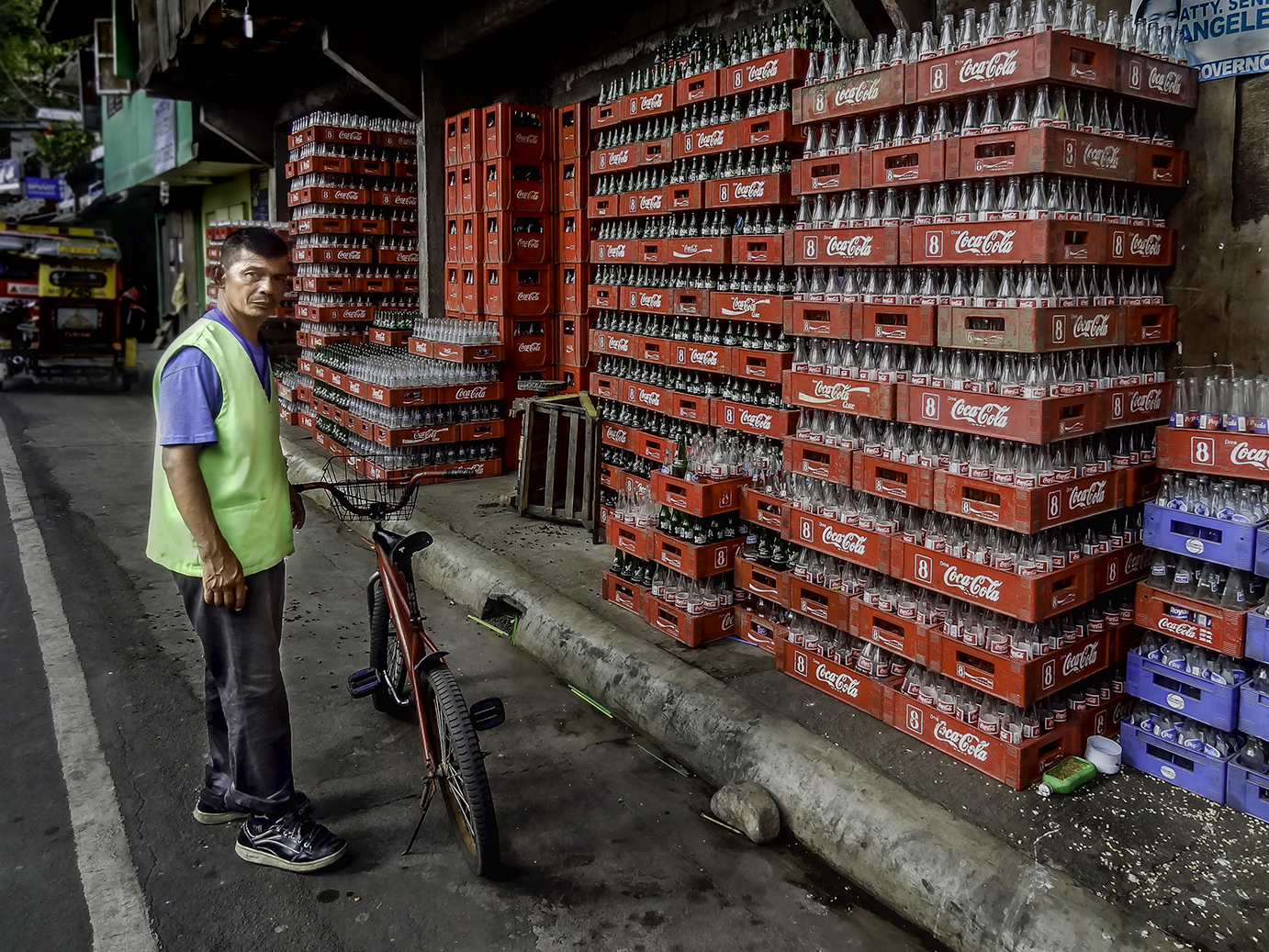
In general, excise revenues across SSA remain low and fragmented, while inflation steadily erodes their real value because indexation is rare. Sugar-sweetened beverages (SSBs) are almost universally untaxed, and tobacco taxes fall far below the World Health Organization’s recommended benchmark. Weak enforcement, undervaluation at customs, and outdated price references further undermine collections.
Health taxes stand out for several reasons: first, they may be more acceptable politically—unlike broad corporate or VAT reforms—which often trigger significant political pushback. When framed around public health, youth protection, and preventing non-communicable diseases, health taxes tend to face less resistance than general tax hikes. Second, they could help boost collections within a single budget cycle. Third, they can be progressive. Evidence from several low- and middle-income countries shows that higher-income groups account for the majority of total tobacco and alcohol consumption in absolute terms, making these taxes less regressive than commonly assumed. In many low- and middle-income countries, wealthier households consume more tobacco and alcohol in absolute terms, making these taxes less burdensome on the poor than commonly assumed. For countries already collecting 12–14 percent of GDP, a well-structured health tax package could provide the final nudge needed to reach and maintain the 15 percent benchmark.
Of course, health taxes are not without challenges. Poorly designed excises can encourage illicit trade, provoke strong industry opposition, or raise concerns about regressivity. However, international experience shows that these risks can be effectively mitigated through sound tax design, strong enforcement, and targeted use of revenues
Potential of health taxes in sub-Saharan Africa
A recent study sheds light on just how much untapped potential exists for health taxes across SSA. The research examined the gap between what countries currently collect in health-related excise taxes and what they could potentially collect. The study covered 97 countries—including several in SSA—and estimated each country’s maximum revenue potential from tobacco, alcohol, and SSB taxes in each country.
To determine this potential, the study took into account structural factors such as GDP, population and demographic trends, consumption patterns, and governance quality. In practical terms, this means estimating what a country should be able to collect given its income level and institutional capacity, and comparing that to what it actually collects. By comparing actual health tax revenues to these benchmarks, the study estimates the potential for increased taxation on tobacco, alcohol, and SSBs in countries for which data are available.
The results are striking (see Figure 2). For example, tobacco tax collections in countries such as Ghana, Rwanda, and Uganda could be increased substantially—by more than 0.5 percent of GDP. These countries are leaving significant revenue on the table—revenue that could be used to support health systems, climate transition goals, and broader development priorities. Similar patterns can be observed in taxation on beer, spirits, and SSBs (Figures 3 through 5). However, the potential for increasing taxes on these products is in relation to current prices, due to the structure of the available data.
Policy implications
Health taxes represent one of the few reforms available to governments operating below the 15 percent tax-to-GDP threshold. The findings highlight the potential for some countries to raise taxes on so-called “sin goods,” assuming they have the necessary administrative capacity to do so. Policymakers would need to assess how to allocate limited administrative resources, considering the relative revenue potential of health taxes compared to alternatives like VAT. If VAT is well-designed and already generating expected revenues, the case for increasing health taxes becomes even stronger. For many countries, a practical starting point is to introduce automatic indexation of specific excises and to extend taxation to SSBs—two reforms that can generate fast, durable revenue gains with relatively limited administrative burden. Ultimately, the optimal level of health taxation is country-specific and should be assessed in light of administrative capacity, including factors such as regional tax policies and the risk of smuggling from lower-tax jurisdictions.
Figure 2. Tobacco tax potential in sub-Saharan Africa
Figure 3. Beer tax potential in sub-Saharan Africa
Figure 4. Spirits tax potential in sub-Saharan Africa
Figure 5. SSBs tax potential in sub-Saharan Africa
Topics
DISCLAIMER & PERMISSIONS
CGD's publications reflect the views of the authors, drawing on prior research and experience in their areas of expertise. CGD is a nonpartisan, independent organization and does not take institutional positions. You may use and disseminate CGD's publications under these conditions.
Thumbnail image by: Iurii Gagarin/ Adobe Stock