

Recommended


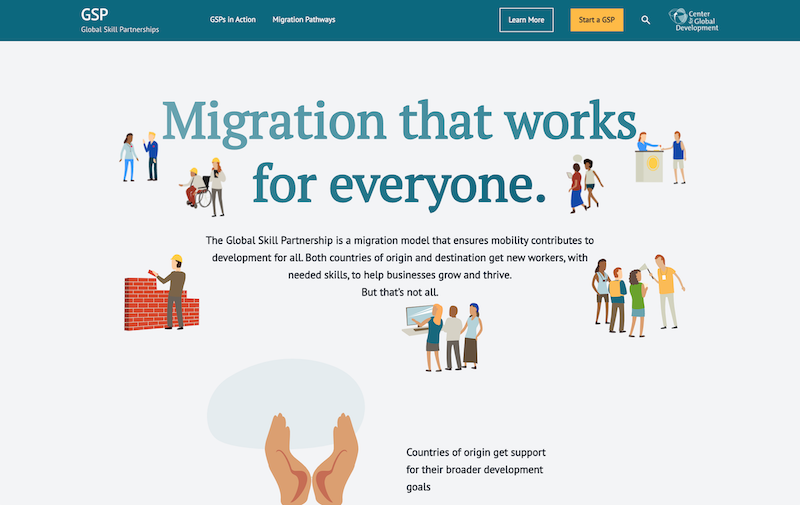
Despite COVID-19, spending on construction activity has increased in recent years, and the sector is on track to grow by 35 percent by 2030. Much of this growth is coming from middle-income countries such as Nigeria, which is suffering from a large deficit in infrastructure as well as large skill gaps within the construction workforce. Similar trends can be seen throughout Europe, with many countries, such as Germany, seeing large and persistent skill shortages and relying on the presence of foreign-born workers.
This case study is one of three in a recent report by CGD and the World Bank, outlining how CGD’s Global Skill Partnership model could be applied to boost the number of skilled professionals in Nigeria and Europe. This piece focuses on the construction sector. It explores how the model could be used to increase the construction skills of potential migrants within Nigeria, with some moving to Germany to take advantage of recent legislative shifts there to foster more vocationally trained migration.
The report and the other case studies are also available below:
Topics
CITATION
Adhikari, Samik, Michael Clemens, Helen Dempster, and Nkechi Linda Ekeator. 2021. A Global Skill Partnership in Construction between Nigeria and Germany. Center for Global Development.DISCLAIMER & PERMISSIONS
CGD's publications reflect the views of the authors, drawing on prior research and experience in their areas of expertise. CGD is a nonpartisan, independent organization and does not take institutional positions. You may use and disseminate CGD's publications under these conditions.