
Commitment to Equity Paper Series

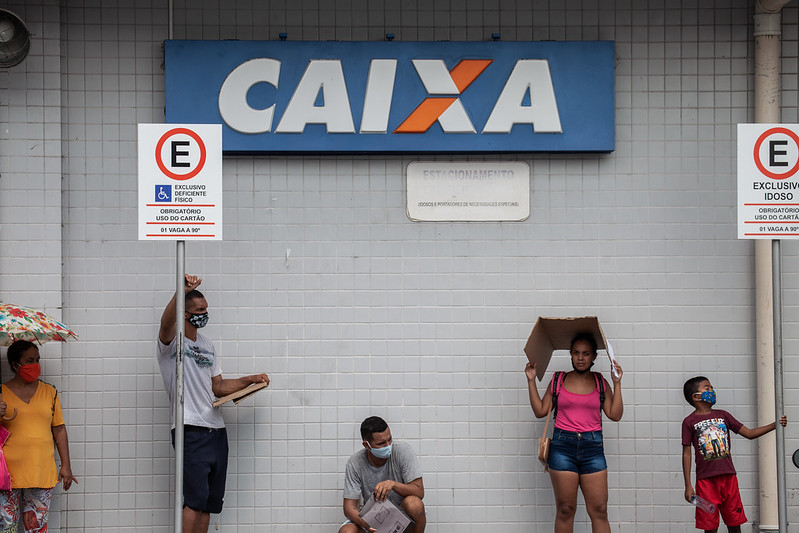
Many governments try to reduce poverty and inequality through a mixture of taxes, transfers, and public services. Individual policies, such as taxation or cash transfers, are frequently evaluated on how well they address these goals. CGD nonresident fellow Nora Lustig’s Commitment to Equity project assesses overall impact of a country’s fiscal policy package on poverty and inequality

More from the Series

WORKING PAPER

Are Budget Neutral Income Floors Fiscally Viable in Sub-Saharan Africa?

July 13, 2021
Using microsimulations, we assess whether budget neutral universal income floors are fiscally viable in twelve SSA countries. We consider three universal basic income (UBI) scenarios of decreasing levels of generosity: poverty line, average poverty gap, and current spending on transfers and subsidie...
Blog Post

COVID-19’s New Poor in Latin America

October 21, 2020
It is to be expected that this accumulation of negative shocks will translate into an increase in poverty and inequality, but what order of magnitude are we talking about? Which income group is being most affected? To what extent have mitigation measures been able to contain the impact?
WORKING PAPER

The Impact of COVID-19 Lockdowns and Expanded Social Assistance on Inequality, Poverty and Mobility in Argentina, Brazil, Colombia and Mexico

October 21, 2020
Based on the economic sector in which household members work, we use microsimulation to estimate the distributional consequences of COVID-19-induced lockdown policies in Argentina, Brazil, Colombia and Mexico. Our estimates of the poverty consequences are worse than many others’ projections because ...
WORKING PAPER

The Impact of Taxes and Transfers on Income Inequality, Poverty, and the Urban-Rural and Regional Income Gaps in China

September 10, 2020
China is characterized by high prefiscal overall, urban-rural and regional inequality. Applying standard fiscal incidence analysis, we estimate the redistributive effect of taxes and social spending on income distribution and poverty.