
Recommended
Blog Post
To Solve the Jobs Challenge, Solve the Care Challenge
If you had an extra 20 hours a week, what would you do? Learn a new skill? Earn more money? Rest?
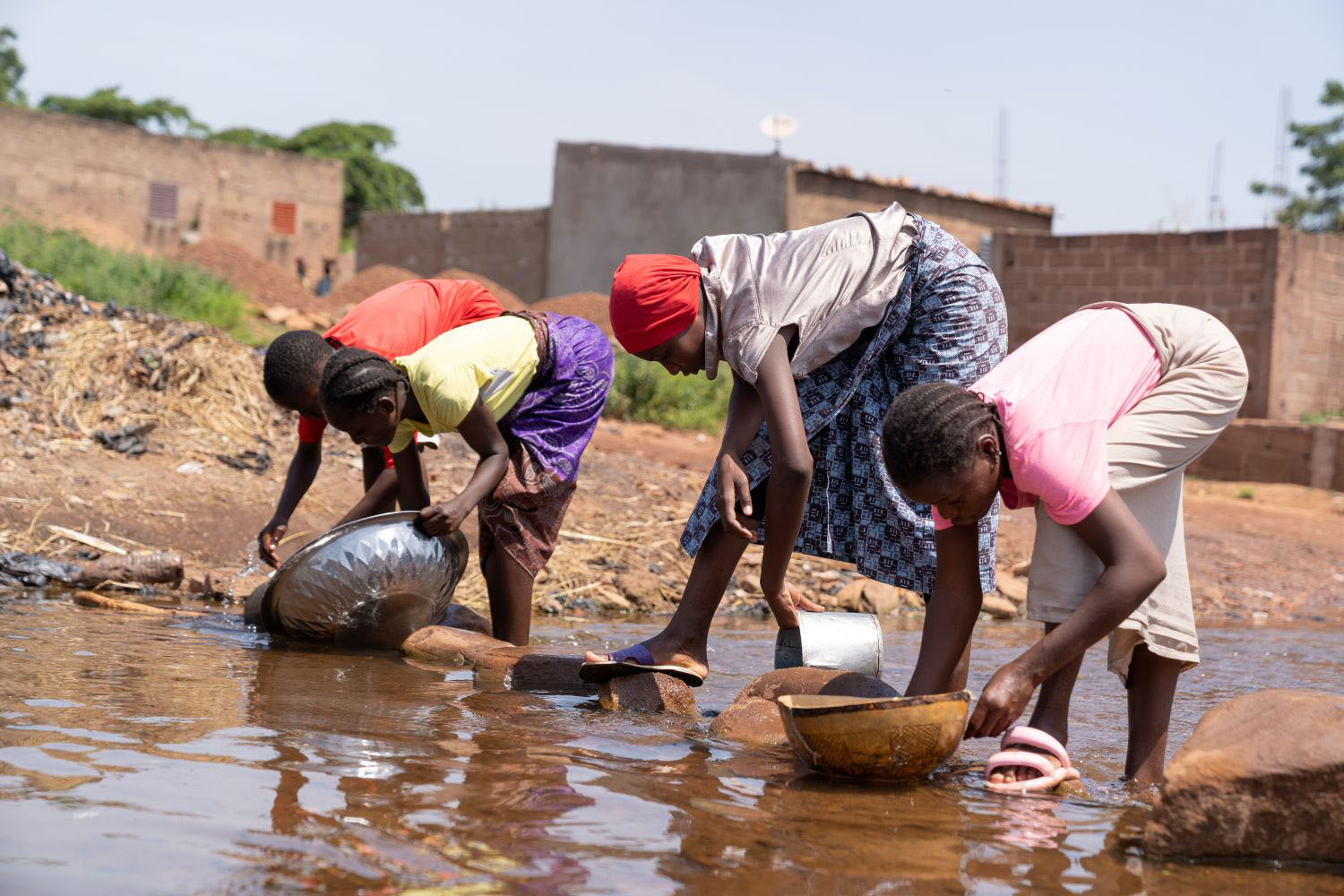
For many women in low- and middle-income countries, that extra time isn’t a luxury—it’s tied up in unpaid domestic work. On average, women spend nearly 30 hours a week on chores like cooking, cleaning, and collecting water or firewood. Men? Just under 10 hours (see Figure 1).
Figure 1. Women spend more time on average than men do on domestic work
Source: Figure created by authors using data from Gottlieb et al. (2024) on average weekly hours worked by married working-age adults, based on “high-quality time-use data from 77 nationally representative surveys covering 7.4 million individual diaries across 50 countries”.
This time gap matters. When women are overloaded with housework, it limits their opportunities—whether that's earning an income, continuing their education, or making decisions about their own health and wellbeing.
Reducing this load—what we define as domestic drudgery—isn’t just about convenience. It’s about creating space for women to thrive. That’s why we reviewed the evidence on what works to decrease domestic drudgery in low- and middle-income countries.
What we reviewed
Our evidence review looked at 25 studies from the past 15 years. Each study examined an intervention aimed at easing unpaid domestic work for women—things like switching to clean cooking fuels, improving electricity access, or bringing water closer to home. All studies took place in low- or middle-income countries, using experimental or quasi-experimental methods.
We wanted to know:
- Which interventions save women time?
- Do they improve other aspects of women’s wellbeing, like their health, income, or empowerment?
- Where are the gaps in the evidence?
What we found
1. Most studies focus on a few countries and on rural areas
Of the 25 studies, almost all focused on just a handful of places. Half used data from South Asia (mostly India), and nearly 40 percent are from sub-Saharan Africa. Most focus on lower-middle-income countries and rural areas. Only 14 studies specifically looked at low-income populations, suggesting that many of the world’s most vulnerable women are still missing from the data.
2. Cooking fuel and technology are the most studied interventions
More than half the studies focused on cleaner cooking fuels or technologies like LPG (liquefied petroleum gas) and improved cookstoves. Others looked at electrification (28 percent) and water access (16 percent).
Surprisingly, we found no rigorous evidence on other common labor-saving tools—like washing machines or dishwashers—or on the impacts of improved transportation, even though these could have big impacts on the amount of time needed for domestic work.
3. Time use is measured, but other outcomes often aren’t
Every study in our review measured time saved on domestic work. That’s good, but only 59 percent of studies also looked at health outcomes, 48 percent looked at employment, and just 4 percent explored empowerment. That means we know what interventions can reduce time burdens, but we don’t always know what women are able to do with their extra time or how these time savings impact women’s wellbeing.
Only one study looked at all four outcomes: time use, health, employment, and empowerment.
What works and what doesn’t
Let’s look at what the studies say about the three main intervention types (Figure 2).
Cooking fuel and technology
Switching from firewood or charcoal to LPG makes a big difference. In all six studies analyzing the impacts of shifts to LPG, women spent less time cooking and collecting fuel. Some studies also found improvements in employment and self-reported health.
Improved cookstoves, however, had mixed results. Only four of six studies showed significant time savings, and their impact on employment or health was limited. None of the studies on switching to LPG or improved cookstoves measured empowerment impacts.
Electrification
Electrification stands out. Six out of seven studies of the effects of improved electricity access or reliability found reductions in domestic work. All found that women spent more time on economic activities—and in a few cases, earned more money.
Two studies linked electrification to better health, and one in India found that women spent more time on indoor domestic tasks—possibly shifting chores from outdoors to inside.
Crucially, electrification is the only intervention studied across all four outcome areas; and results from this one comprehensive study were consistently positive.
Water access
Bringing water closer to home also saves time, especially in rural areas where collecting water is a daily task. All five studies examining the impacts of improved water access reported time savings. Two found health improvements, including fewer respiratory illnesses and less diarrhea.
But only two looked at employment, and none looked at empowerment. That’s a big gap.
Figure 2. Cooking fuel and technology interventions save the most time
Who benefits most?
Women, especially those in rural and low-income households, are the primary beneficiaries of these interventions.
For example, in India and Zambia, electrification and piped water had a disproportionate impact on women, significantly reducing their time burden. In some cases, it even led to higher wages.
That said, benefits don’t always flow equitably. One study found that electrification increased men’s earnings, but reduced women’s wages. Understanding how benefits are shared within households and communities is critical.
What this means for policy
Infrastructure investments—like expanding access to clean cooking fuels, electricity, and water—work. They decrease domestic drudgery and can improve women’s time use, health, and income.
But they’re not enough on their own. To translate time savings into real gains for women, we need complementary strategies—like job access, childcare, and financial inclusion programs.
We also need more gender-sensitive research that goes beyond time use to examine impacts on empowerment, agency, and broader wellbeing. In addition, collecting data on intervention costs and analyzing returns on investment can strengthen the business case for these initiatives.
Decreasing domestic drudgery isn’t just a matter of convenience; it’s a path to greater gender equity and economic empowerment. We know some of what works. Now it’s time to build on that knowledge and ensure the benefits reach women across the world.
Topics
DISCLAIMER & PERMISSIONS
CGD's publications reflect the views of the authors, drawing on prior research and experience in their areas of expertise. CGD is a nonpartisan, independent organization and does not take institutional positions. You may use and disseminate CGD's publications under these conditions.
Thumbnail image by: UN Women/Ryan Brown