Recommended

The UK Government’s February announcement that aid will fall to 0.3 percent of gross national income by 2027 has led to a wave of concern as to which programs will be cut. The outlook is especially bleak for the UK’s bilateral health programmes which are being de-prioritised in favour of in-country refugee costs and multilateral commitments. In such a context, the UK should use clear criteria to provide effective, efficient health aid to a few key countries, and responsibly transition out of the rest.
In this blog, we consider the case of Sierra Leone which is set to lose the vast majority of its UK aid. This includes a £35 million Saving Lives in Sierra Leone Phase 3 (SL3) grant on reproductive, maternal, newborn, and child health, which will be reduced to under £1 million in 2026. We argue that aid to Sierra Leone should not end for three key reasons: high health needs, insufficient alternative funding, and the cost-effectiveness of interventions. The only case against continuing UK aid to Sierra Leone is limited government political will to build health systems.
If aid to Sierra Leone does end, the harm should be minimised through a dedicated health financing transition programme to consolidate remaining donor and domestic financing, and to prioritise the highest value services.
Three “direct impact” and one “catalytic impact” criteria for determining UK priority countries
The purpose of UK aid, as defined by the government’s manifesto, is “a world free from poverty on a liveable planet.” Therefore, a reasonable first criterion for UK aid is the degree of poverty. In health, this can be approximated through life expectancy and population health statistics. However, aid only meaningfully reduces poverty and saves lives if it is truly additional, i.e., no other funding source would step in if the UK pulled out. Therefore, the second criterion for UK health aid should be availability of alternative funding—either domestic or donor. Finally, since the UK should strive to achieve the greatest impact in poverty reduction and lives saved despite its limited aid budget, a third criterion should be the likely short-term cost-effectiveness of aid provision.
In addition to these “direct impact” criteria, it is important to include a criterion that considers the impact of UK aid in catalysing improvements in use of domestic expenditure—as domestic expenditure and strong health systems are the only way to transform the health indicators of the country in the medium term. Therefore, and in line with Dercon’s “Gambling on Development,” the fourth criterion for UK aid should be whether there is government political will to use aid to develop the health system. This is particularly important because Sierra Leone is not in an acute crisis, nor is it a fragile or conflict-affected state (FCAS), and therefore the goal of aid can and should be long-term development.
Figure 1. Criteria for determining priority countries for UK aid

Sierra Leone is a strong candidate for UK aid…
Based on the first three “direct impact” criteria, Sierra Leone is a strong candidate for health aid from the UK:
- Health outcomes are extremely poor—far below the average for sub-Saharan Africa. Life expectancy is amongst the lowest in the world and under-five child mortality is seventh worst globally. Women and girls are especially at risk. Maternal mortality is 100 times higher than in the safest countries, and 83 percent of women aged 15 to 49 have undergone female genital mutilation. Sierra Leone ranks lowest on the Human Development Index of any non-FCAS.
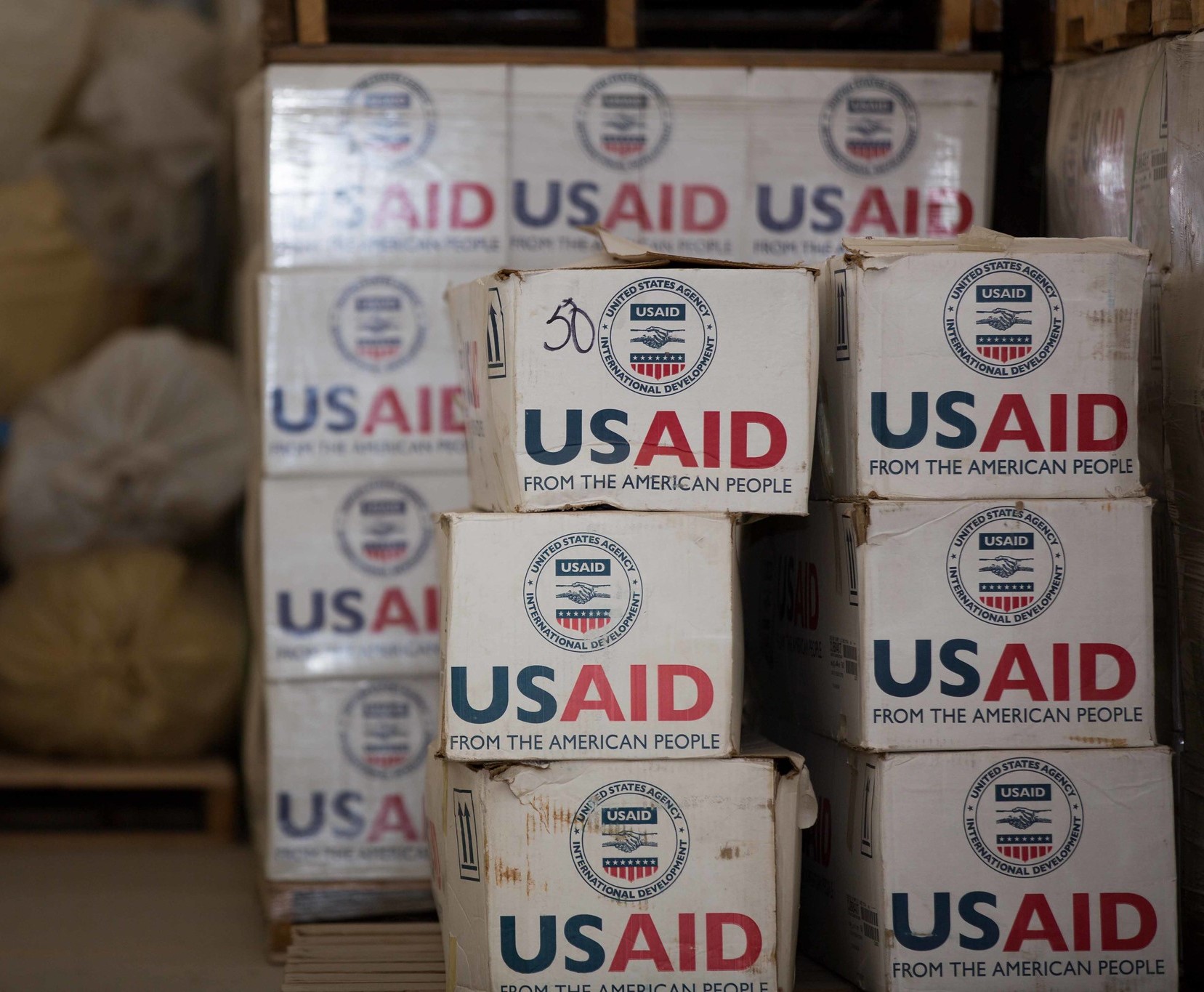
- Sierra Leone does not have alternative funding options. As a low-income country at risk of debt distress, its fiscal space is extremely constrained. In 2023, the most recent year with data, the government spent just US$6 per capita on healthcare—the third lowest of any non-FCAS. The country is especially ill-equipped to replace UK aid cuts as it is already grappling with the loss of US global health assistance, and is relatively underprioritised by other donors. In fact, it was one of the top 10 most exposed countries to US aid cuts, with US global health assistance in 2022–2023 being the equivalent of 52 percent of Sierra Leone’s domestic government health expenditure.
- Health interventions in Sierra Leone have extremely high marginal cost-effectiveness. This is partly due to the above factors: the high health need (in terms of high burden of preventable diseases) combined with low domestic health expenditure means the marginal cost of saving a life in Sierra Leone is exceptionally low. Research which considered the cost per disability-adjusted life year averted from changes in health expenditure in 97 low- and middle-income countries found only six countries, only one of which was non-FCAS, where it was cheaper than Sierra Leone. Several of the paused USAID projects which the Project Resource Optimization team deemed to be “verifiably cost-effective, highest impact” were in Sierra Leone.
…with low government prioritisation of health being the only case against
The final criterion is more difficult to measure, particularly at a distance. The UK will need to do an in-depth assessment, in partnership with Sierra Leonean experts who know the politics and history well. But there are some indicators we can consider. One is domestic health spending. In Sierra Leone in 2023 it was just 4.5 percent of total government expenditure—below the average for the African region, and far below the target of 15 percent agreed by the African Union in the Abuja Declaration. The 2026 budget, which was presented to parliament last week, allocated less to health (in both absolute and percentage terms) than the 2025 budget. A second indicator is ease of handing over donor projects to the government. In Sierra Leone, challenges with such handovers contributed to the FCDO determining that the first year of SL3 “moderately did not meet expectations.” Furthermore, the commodities for the Free Health Care Initiative (FHCI) are still primarily funded by the UK 15 years after FHCI was launched, even though UK support was supposed to be temporary.
If aid is cut, a responsible transition is essential to save lives
The clear need, lack of alternative funding options, and high cost-effectiveness of UK health aid in Sierra Leone suggest that it should not be cut. However, if it is cut, it is essential to develop a responsible transition program to avoid the disruptions to health services that followed the dismantling of USAID.
We therefore propose a three-year health financing transition support plan, aligned with the World Bank's Health Financing Reform Acceleration Program. The goal would be to strengthen the government’s ability to coordinate donors and maximise impact of the remaining domestic and donor funds. The transition plan could have four main pillars.
- The UK could offer to fund a donor coordination secretariat, chaired by Sierra Leone’s Ministry of Health and Sanitation, with the goal of moving towards a New Compact approach whereby the government funds the most high-impact, cost-effective services, and funders provide top-up funding to support the lower priority services. This approach has the potential to increase healthy life years by 15 percent, clarify the roles of government and donors, and improve the resilience of health systems to future shocks. It will be vital to build this approach into the current round of World Bank supported “Health Compacts” and the US bilateral Memoranda of Understanding. It will also be necessary to use the UK’s influence that comes from their large multilateral health spend to ensure multilaterals such as Gavi, the Global Fund, and the World Bank align with these approaches and provide sustainable, non-disruptive support, which is on-budget where possible.
- The UK could offer to provide technical assistance for the Sierra Leone government to develop a national health financing strategy that incorporates both domestic and donor financing. This is timely, both because the current Health Financing Strategy and National Health Sector Strategic Plan end this year, and because the WHO has recently issued guidance for countries on how to address the global health financing cuts. The strategy should include both short-term crisis measures to protect financing for priority services and populations and to raise additional funds (e.g., health taxes); as well as medium-term shifts to strengthen the system (e.g., consolidating financing streams, reforming PFM, and improving budget execution).
- The UK could offer to provide technical assistance for a locally led national prioritisation process to determine the best use of remaining limited resources, and which should be funded by government and which by donors. This would form the basis of the New Compact, allocating top priorities to government and lower priorities to donors, and would clarify which drugs, if any, should continue to be provided under the FHCI.
- Finally, whilst the previous steps are being developed, the UK should provide a tapering three years of support for key existing lifesaving programmes. In the first year, the UK could continue to supply the highest priority FHCI commodities, alongside technical assistance on procurement and supply chain management. In the second and third years, the UK could increasingly provide on-budget funding for these commodities to enable the development of appropriate in-country systems.
Aid to Sierra Leone should not be cut. However, if cuts do go ahead, then a responsible transition plan can minimise disruption and build a more sustainable partnership with donors. The transition plan also offers the Sierra Leone government an opportunity to take control of its health sector and demonstrate the leadership and domestic funding that will be key to building its health system: this leadership is crucial to motivate the return of bilateral donors. As the UK continues scaling down aid, similar exercises should be conducted in other previously supported countries.
Thanks to Rachel Bonnifield for comments on an earlier draft.
Topics
DISCLAIMER & PERMISSIONS
CGD's publications reflect the views of the authors, drawing on prior research and experience in their areas of expertise. CGD is a nonpartisan, independent organization and does not take institutional positions. You may use and disseminate CGD's publications under these conditions.
Thumbnail image by: Adobe Stock Images