Many of the most successful G20 initiatives have involved improving international institutions that benefit low- and middle-income countries—not least the work around multilateral development bank (MDB) capital adequacy frameworks. In a note issued in October, I suggested that the G20 could coordinate around a goal of Zero Low-Income Countries by 2040, and in a note released today, I point to a number of policies G20 countries could individually or collectively introduce to help reach that goal. Many of the suggestions involve international institutions, and one of the policy areas I discuss is technology, where I think there is a considerably larger role for the World Bank in particular.
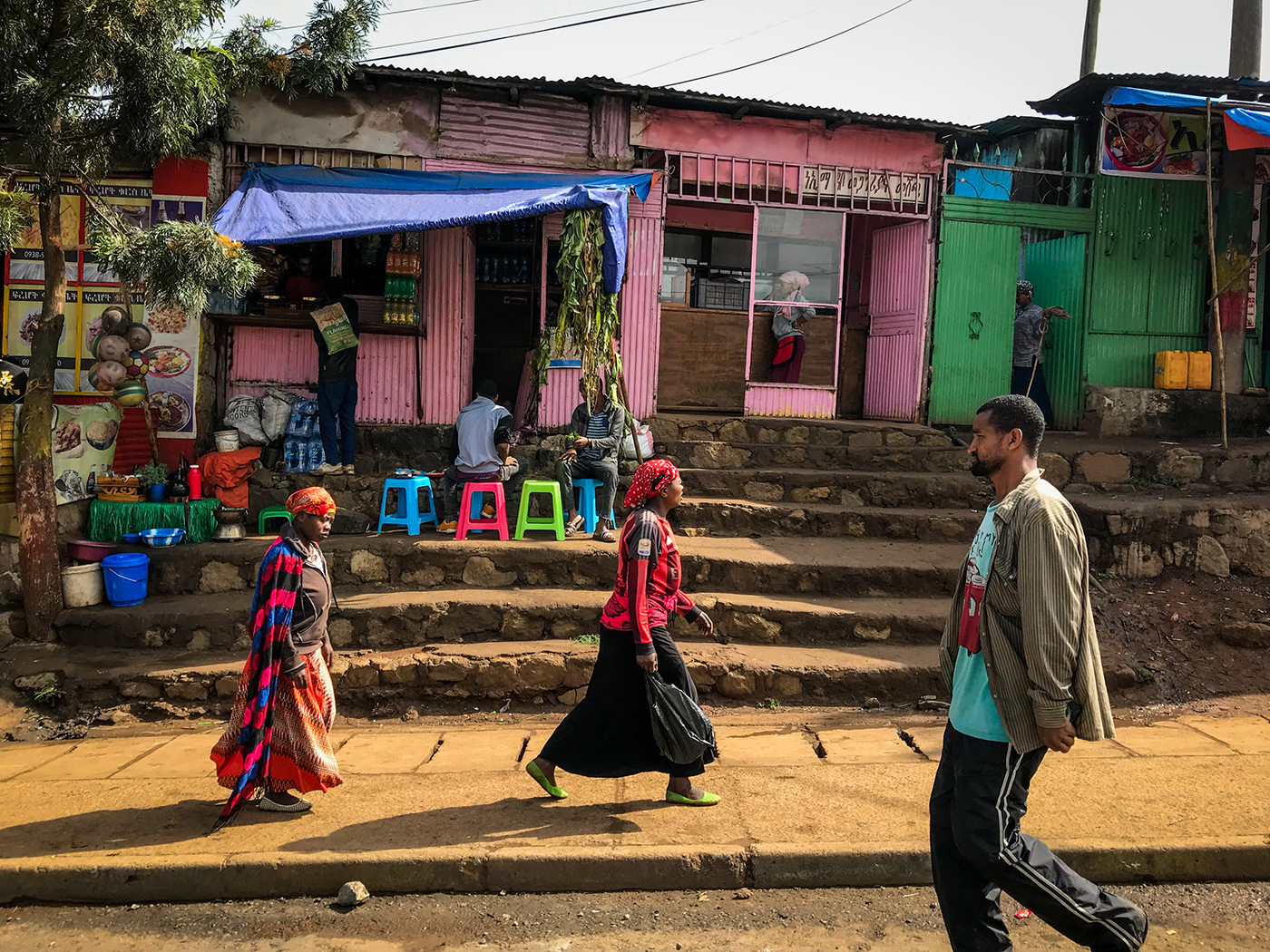
As I explain in the note, low-income countries account for 0.4 percent of the global (market) economy. Such a small, poor market is not attractive to innovators and researchers, and low-income countries cannot afford to support significant research of their own. That combination means that technological challenges specific to poor countries are considerably under-researched, and solutions underdeveloped.
I propose that the G20 should support directed open-access technology research into these issues and potentially back a new global institution dedicated to research, development, and rollout of such technologies. This could involve a commission made up of representatives of developing countries, development organizations, and scientific experts to identify potential innovations for challenges that are neglected, tractable, and high impact, supported by a secretariat that would finance research through development and rollout in the areas selected. It builds on an idea that Lee Robinson, Euan Ritchie, and I proposed for a development institution modeled on the US Advanced Research Projects Agency.
For a global public good like technology, and for an institution aimed at the world’s poorest countries, the World Bank might be a suitable secretariat, and a financial intermediary fund a suitable financing vehicle. The IDARPA (International Development Research Projects Association) fund would be a specific institutional financing mechanism to back research, pilots, trials, patent buyouts, and prizes, and act as an institutional vehicle for funding advance market commitments for technologies with specific application to countries below the IDA threshold. The targets for research and development along with oversight would be provided by the commission, with the World Bank supporting staff and project management.
The kind of technological advances that IDARPA might support include:
- Diagnostics: Rapid, reliable, and affordable point-of-care tests requiring no equipment and minimal training are available for HIV, syphilis, and malaria, but tests for other infections are needed. Multiplexed point-of-care diagnostics for related illnesses could diagnose comorbidities, but also eliminate problems due to frequent misdiagnoses. A rapid test aimed at neonatal sepsis could help treat a condition that disproportionately affects low- and middle-income countries and accounts for 400,000 to 700,000 annual deaths (CGD and the Market Shaping Accelerator are helping to design an advance market commitment specifically for a rapid neonatal sepsis diagnostic: a disposable, fingerstick-based multiplexed biomarker test costing under $1, delivering results within 30 minutes at the bedside, requiring no lab work or specialist training).
- Drugs: Current soil-based helminth drugs face declining efficacy, particularly against whipworm. An affordable, simple-dose, broad-spectrum drug that could be used for preventive chemotherapy and in children could improve millions of lives. More broadly, drug repurposing — testing and applying existing approved or generic drugs for new indications—was used to repurpose fexinidazole as the first all-oral treatment for both stages of sleeping sickness, and fexinidazole may also be effective against Chagas disease. A team at Duke has proposed prizes for generic drug repurposing for neglected diseases.
- Vaccines: Current malaria vaccines could save 800,000 additional child lives by 2030 if rolled out at speed and scale. But they are multi-dose and partially effective, and their efficacy fades further over time. A more effective vaccine could save millions of lives.
- Vector control: A gene-drive-capable mosquito strain has suppressed patient-derived malaria, but considerable additional work is needed before it would be safe and ethical to release gene-drive mosquitoes into the wild.
- Crop and livestock development: The fact that agricultural research focuses on the crops, crop pests, pathogens, and climatic conditions of rich countries explains 15-20 percent of cross-country agricultural productivity differences. Nitrogen-fixing locally suitable crops could mitigate very low fertilizer use in low-income countries. Perennial grain sorghum, millet, and other staple crops widely used in the poorest countries could significantly boost productivity, while drought and heat-resistant crops would respond better to the challenge of climate change, which is already having its greatest impact in the poorest countries, and parasite-resistant varietals could increase output. If local staple crops were multi-micronutrient biofortified this could improve nutritional outcomes. Droughts in the Horn of Africa between 2020 and 2023 killed millions of cattle, sheep, and goats. A decentralised genomic breeding service specific to local conditions could help rapidly incorporate valuable adaptive traits of indigenous breeds like trypanotolerance (tolerance to trypanosomiasis, transmitted by tsetse flies), heat resistance, and drought survival into the herd population.
- Off-grid solutions: Only 45 percent of the population of low-income countries has access to electricity compared to above 90 percent (even) in lower-middle-income countries. Methods to reduce or mitigate that problem might include a cheap(er) off-grid refrigerator. A solar-powered atmospheric water harvester could provide clean water for off-grid households in arid areas, but current models are far too expensive for use in low-income economies. Waterborne diseases kill over 500,000 people annually. Existing point-of-use technologies address only certain contaminants and require either frequent resupply and/or electricity. A cheap, passive, long-lasting nanocomposite filter capable of simultaneously removing microorganisms, arsenic, and heavy metals from any freshwater source at flow rates sufficient for household use could help significantly reduce ill health. International standards for non-sewered sanitation systems were adopted in 2018, and pilot systems are in operation in Madagascar and South Africa. But unit costs are still too high for widespread adoption in the poorest countries.
IDARPA could work in part through supporting existing sector-specific initiatives, including the Drugs for Neglected Diseases Initiative in health and CGIAR in agriculture, in part through open calls, prizes, and the development of an advance market commitment. The World Bank has some experience in financing technology and research, including the CGIAR itself, but given the centrality of technological advances in development progress, the institution’s engagement has been limited.
That the World Bank should do more to finance technology development is not a new idea: in 2019, Scott Morris, then of CGD, suggested a World Bank Research Ventures Fund financed by donor contributions, the IDA Regional Window, and IBRD and IFC profits. In turn, he was building from a 2015 proposal by Nancy Birdsall and Ana Diofasi for a new global public goods window at the World Bank to support, among other things, basic agricultural and health research in developing countries. But it is time for World Bank stakeholders to listen. The bank has long helped facilitate trade and financial flows, and has more recently moved into concerning itself with the global flow of people, pathogens, and pollutants. It is past due for the World Bank to expand its work in global technology flows as well.