As we move further into a decade marked by geopolitical turbulence, institutional retrenchment, and a waning commitment to liberal multilateralism, the question before us is not whether the international order is changing—but how to adapt. In a new paper, published by the Policy Center for the New South, we argue that development cooperation is at a critical inflection point.
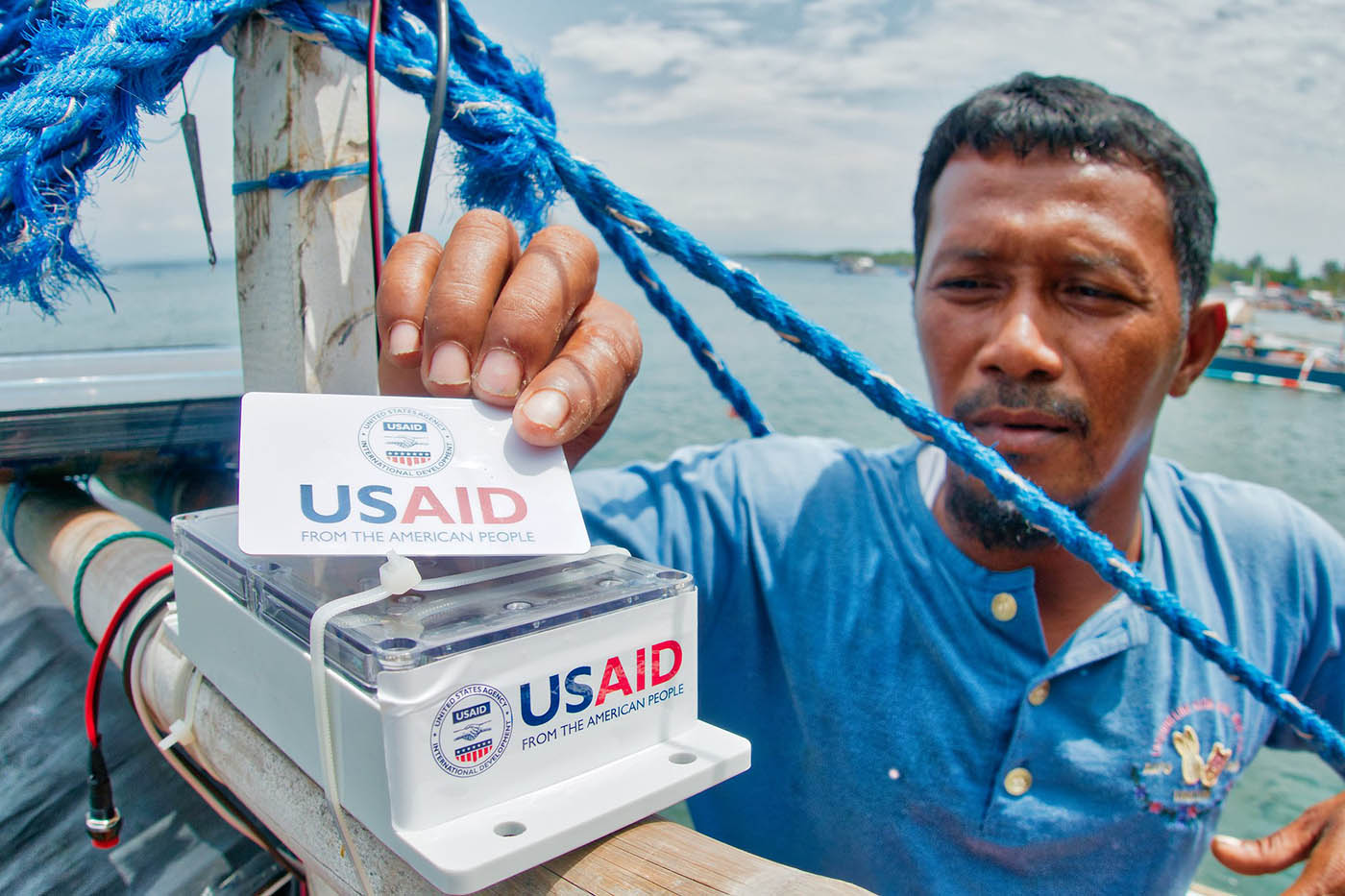
The post-World War II liberal consensus—built on universal values and led largely by the United States—is breaking down under the pressure of renewed interest in nationalism, strategic decoupling, the weaponisation of policies, and the marginalization of international institutions. Nowhere is this more evident than in the United States’ symbolic withdrawal from the Sustainable Development Goals in early 2025.
What comes next?
We propose that the answer lies not in attempting to salvage a broken universalism, but in embracing like-minded internationalism: the deliberate formation of issue-based coalitions among actors who share normative commitments and pragmatic goals. These groupings—flexible, pluralistic, and often innovative—offer a functional and legitimate response. Crucially, they provide a “Plan B” that is not a retreat into parochialism, or a nostalgic longing for the past, but a realistic and principled strategy of adaptive multilateralism.
Like-minded internationalism is not new. It builds on models such as the Scandinavian bloc in gender policy, or the IBSA Dialogue Forum (India-Brazil-South Africa), and extends them into a more dynamic framework. These coalitions are
- issue-driven, rather than geographically or economically defined;
- institutionally innovative, breaking with traditional multilateralism;
- led by coalitional leadership, often from middle powers rather than big powers;
- inclusive, drawing on a pluralism of actors across the North-South divide and sectors (public, private, civil society); and
- tactically opportunistic, seizing political windows and crafting “sticky” narratives grounded in science and moral clarity.
In this model, legitimacy arises not from universality, but from convergence—on values, interests, and urgency. Like-mindedness becomes a strategic form of selective multilateralism, attuned to complexity and disorder, rather than aspirational universality.
Like-minded internationalism in practice
Recent coalitions like UNITAID and the High Ambition Coalition (HAC) show how like-minded internationalism can work in practice.
UNITAID emerged in the early 2000s from a coalition led by France and Brazil, backed by Chile, Norway, and the UK. It introduced a solidarity levy on airline tickets to fund HIV/AIDS, tuberculosis, and malaria responses. What made UNITAID distinctive was not only its novel financing model, but also its pluralistic governance, which included both donor and recipient countries, civil society, and the World Health Organization. It was successful because of knit-working—building networks across interests and institutions—and the moral narrative of global health equity.
HAC, in contrast, was driven by the vulnerability of Small Island Developing States. Led by the Marshall Islands, it reshaped the Paris Agreement agenda, pushing for a target of a 1.5°C limit on global warming—an outcome once thought impossible. It did so by framing ambition as an moral imperative and mobilising bilateral diplomacy through what its architects called a “mosquito fleet” of persistent argument. It is a model of soft power unlinked from sovereignty, leadership without hegemony.
Both cases show that coalitions of the willing can build functional legitimacy, harness political momentum, and enact real change—even in the absence of global consensus or US leadership.
Why now?
The urgency of like-minded internationalism lies in the deteriorating international context. The resurgence of US unilateralism, the fracturing of development paradigms, and the instrumentalisation of development cooperation as a tool of geopolitical competition all point to a loss of faith in the traditional multilateral order. Yet this very fragmentation creates opportunities. As multilateral institutions falter, alternative coalitions can step into the breach, anchored in credibility, shared values, interests and tactical effectiveness.
To do so, they must seize moments of institutional flux, deploy evidence-based policy narratives, and cultivate multi-level legitimacy. Like-mindedness is not a romantic call to idealism, but a call to strategic realism: one that responds to the world as it is.
From norm-takers to norm-makers
The broader lesson is this: in a world no longer governed by hegemonic norms, states and coalitions must decide whether they will become norm-takers—reactive, subordinate, and divided—or norm-makers—who assert their agency and shape the future of international cooperation. Like-minded coalitions offer a plan for the latter.
This is not to say that like-mindedness can solve every collective action problem. But it can foster coalitional resilience, mitigate fragmentation, and offer credible pathways for cooperation around global public goods—from climate to health to digital governance.
As such, it is more than a second-best solution. It may well be the most viable form of global governance in a post-hegemonic world.
The full paper is here.