
Recommended
BRIEF
Can African Countries Agree a New Compact with External Donors?

If 2025 exposed the fragility of the global health financing system, 2026 must be the year reform shifts from reflection to action. Funding volatility, fragmented donor programs, and weak transition planning are no longer abstract policy concerns. For aid-recipient countries, these problems have increased transaction costs for governments, weakened national planning processes, and crowded out domestic health spending. In turn, aid disruptions interrupt essential services and put lives at risk. Global and regional fora have taken steps to agree on what reform should look like: The World Health Assembly resolution towards strengthening health financing has been adopted by WHO’s Executive Board and the African Union Commission has supported a reform handbook on Financing Africa’s Health Security and Sovereignty.
A new policy paper by CGD looks at what reform of health aid could look like in practice—specifically, how a New Compact for health financing can move from principle to practice. Until now, the discussion about the New Compact has focused on conceptual foundations, including implications for donor priority-setting, a case study in Ethiopia, and reforms for Gavi. The paper shifts the focus to the operational questions. It further develops a locally-led, evidence-informed approach to empower countries to set their own health priorities, enabling sustainable domestic financing for essential services while consolidating aid into complementary support. The paper examines how the New Compact could operate in practice at global and country levels, how it could emerge within different scenarios for global health reform, and what conditions and policy shifts may be needed for country adoption.
Where the global health financing architecture could be heading
Implementing Country New Compacts for health financing depends on macrolevel decisions about the future of the global health architecture. The policy paper outlines three possible scenarios for global health reform:
Scenario 1. Status quo: No significant architectural reform to defragment external financing for health services and no major donor policy shifts.
Scenario 2. Donor policy shifts but no architectural reform: Some donors or multilaterals make significant policy changes that improve external financing arrangements and facilitate implementation of Country New Compacts.
Scenario 3. Consolidated multilateral financing mechanism: Significant architecture reform brings most (though not all) external financing for health services under a single financing mechanism.
Scenarios 1 and 2 point to the implementation of Country New Compacts…
In scenarios 1 and 2, where we do not see significant consolidation of the global health architecture, Country New Compacts are the most likely model. At the country level, the New Compact becomes a technical framework for aligning domestic and external financing. Countries could adopt this through country-level coordination initiatives (e.g., sector-wide approaches [SWAps]) as guiding principles for aligning behind an explicit health benefits package, led by country institutions, and adopting a notional domestic-first principle in budget formulation. Researchers at CGD are developing roadmaps for New Compact implementation with partners in Zambia, Laos, and Nigeria. Note, the New Compact is not an alternative or replacement to SWAps or other donor coordination platforms, but a framework that could be adopted to determine how resources should be allocated. This is especially relevant as many countries face tightening fiscal space, with rising debt service obligations which are absorbing government revenues and limiting capacity to increase public health spending. This approach not only helps mobilise domestic finances, but ensures that aid expands access to services, is used more effectively, and is better aligned with national priorities.
…while Scenario 3 is better aligned to a Global New Compact
Scenario 3, where a significant portion of external financing for health services is consolidated into a single multilateral channel, is best aligned with a Global New Compact. At the global level, the New Compact represents a strategic vision for how development assistance for health services could evolve. Under this model, donors and countries would agree to gradually move away from fragmented and highly earmarked funding streams. Instead, they would align their financing around country-defined priorities as well as support shared global goods such as disease surveillance, research and development, and pandemic preparedness. This could be truly global, for example, through a declaration at the World Health Assembly (WHA), with the three core pillars forming part of that commitment. Or it could function at the regional level, and be agreed between a subset of regional bodies and countries such as the African Union, the European Union, and the United Kingdom. This shift would simplify the complex landscape of global health financing and reduce the administrative burden placed on ministries of health. A forthcoming paper from CGD will explore the role of multilateral development banks in channelling financing under a Global New Compact.
Are countries ready for a New Compact?
A key question for policymakers is whether the conditions needed to implement a Country New Compact exist in a given context. To address this, we, alongside our co-authors, introduce a country readiness framework with six domains that shape a country’s ability to adopt the model: the political and economic context, governance and coordination mechanisms, health financing capacity, evidence-informed priority setting, public financial management, and donor coordination. A forthcoming report elaborates on these domains.
The aim is not to determine whether a country should adopt the New Compact. Instead, the framework provides a diagnostic tool to help policymakers and donors identify where systems are strong, where gaps remain, and what reforms or investments may be needed before transitioning to a New Compact approach. In sum, the framework provides a practical way to assess how reform could be pursued in different country contexts.
What next?
Recipient countries could:
- Set clear health priorities, strengthen donor coordination, and make the case for a Country New Compact. Investing in evidence-informed priority-setting processes, demonstrating clear priorities for your country and assertive donor coordination can deliver results and increase the readiness of donors to support a New Compact approach.
- Assess readiness and communicate reform priorities. Evaluate institutional readiness for transition guided by the framework and use existing coordination mechanisms, such as SWAps or World Bank-led National Health Compacts, to clearly signal priorities and expectations to donors, aligned with a New Compact.
- Build collective momentum for reform. Work with other countries to advocate for reforms to the global health financing architecture and advance a Global New Compact. Use platforms through the African Union, Accra Reset, and WHA.
Donor, regional, and multilateral institutions could:
- Back countries that express an interest in a Country New Compact. Work with ministries of health and finance and existing country coordination platforms to develop a roadmap to implementation and strengthen conditions for a New Compact.
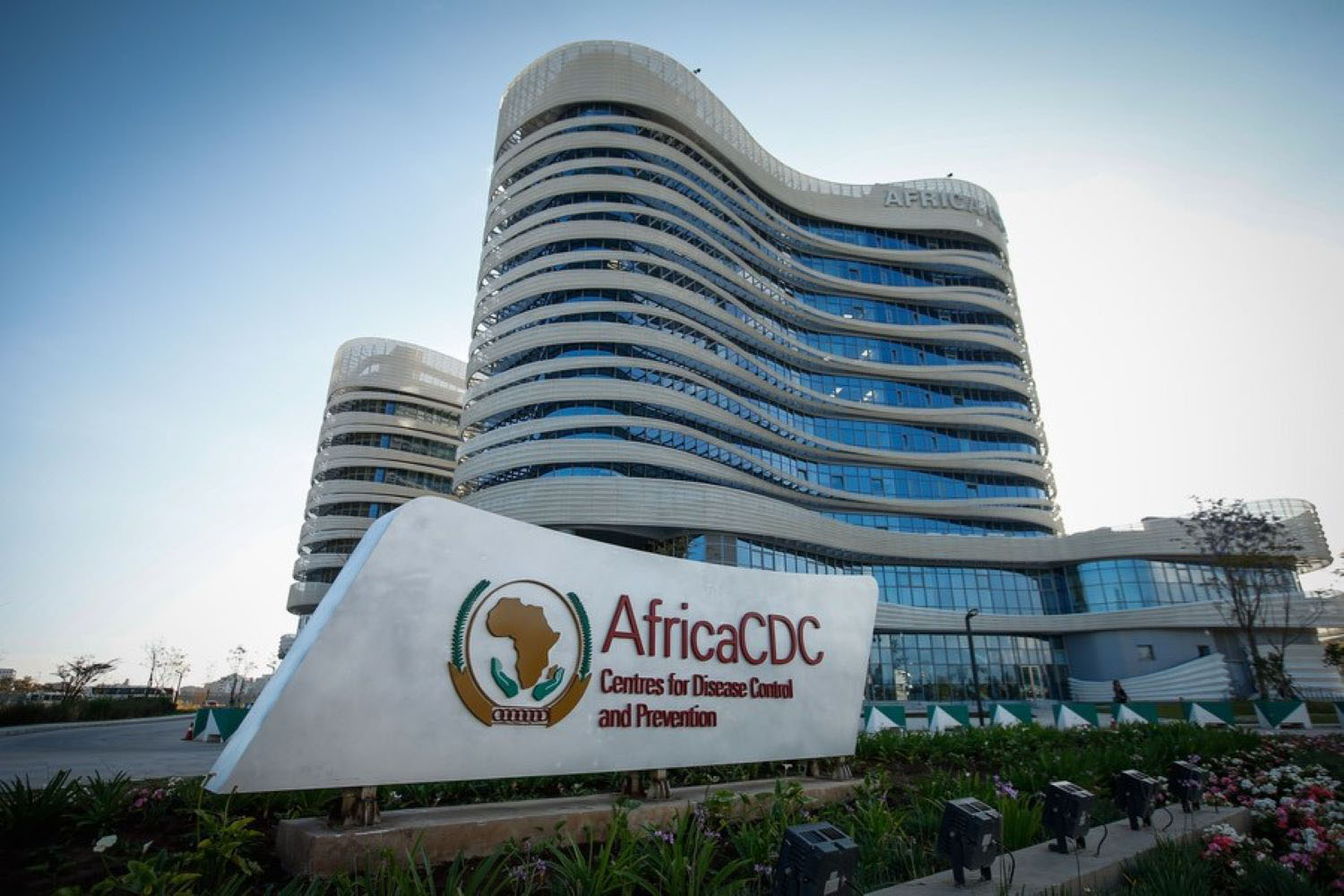
- Provide priority-setting and health financing support. Expand coordinated technical assistance for priority setting, health financing reform, public financial management, and institutional foundations for implementing a Country New Compact. In Africa, for example, the African Union and the Africa Centres for Disease Control and Prevention could expand support for countries to improve health financing governance, strengthen expenditure tracking systems, and institutionalise evidence-informed priority setting.
- Shift financing models. Move away from tightly earmarked, disease-specific funding towards more flexible, country-led support for health systems, including approaches such as envelope financing and on budget support.
- Advance a Global New Compact and facilitate dialogue between partners. Build a coalition ready to coordinate and consolidate development assistance for health. Through these coordinated coalitions led by the African Union, Accra Reset, and WHA, integrate New Compact principles into reforms to guide implementation.
Now is the moment for reform
Recent shocks to the global health financing landscape have made it clear that incremental improvements may no longer be enough. Countries need financing arrangements that are resilient to political shifts in donor countries and capable of supporting long-term health system development.
The New Compact offers a pathway towards those goals. The Country and Global New Compact offer an approach that aid-recipient countries, donors and regional and global institutions could take forward. There is of course the risk of the status quo continuing or worse, we could see increasing fragmentation with the creation of new bilateral and regional financing channels. But even if the current architecture of global health initiatives remains largely intact, countries and donors could still adopt elements of the New Compact within existing institutions. By placing national priorities at the centre of health financing and redefining the role of external aid, the New Compact provides a framework for building more stable and effective health systems in an uncertain world. The challenge now is to move from principle to practice.
With thanks to authors of the policy paper and peer reviewers.
DISCLAIMER & PERMISSIONS
CGD's publications reflect the views of the authors, drawing on prior research and experience in their areas of expertise. CGD is a nonpartisan, independent organization and does not take institutional positions. You may use and disseminate CGD's publications under these conditions.