
Recommended
Blog Post
How the UK Should Focus Its Aid in 2026
Blog Post
UK Aid Cuts Now Deeper than the US After Congress Pushes Back
Last week, the Foreign Secretary set out how the government would implement the major cuts to the UK’s aid budget announced a year ago. At an event we held the same evening, the Development Minister Baroness Chapman described this as a “reset” in the UK’s approach. In this blog we highlight five of the main changes.
Overall, despite needing to reduce the Foreign, Commonwealth and Development Office (FCDO) spending by a third, the government has actually increased its humanitarian spend as part of a wider focus on fragility and conflict—particularly in Ukraine, Sudan, Palestine and Lebanon. While the government has been able to offer more certainty with budgets set for three years, the humanitarian focus has meant steep reductions elsewhere with bilateral support for Africa cut by over half to the lowest level in 25 years, and the group of Least Developed Countries also seeing a historically low share of UK aid. Meanwhile, the government’s commitment to increased multilateral support seems in doubt, with its share of FCDO’s budget only marginally above historic trends.
1. Stable budgets improve planning
Just over a year ago the Prime Minister announced development spending would fall from 0.5 to 0.3 per cent of GNI by 2027. The cost of hosting refugees in the UK remains a significant drain on the aid budget, removing £1.5-2.2 billion per year but the FCDO no longer needs to cut its own spend to fund any overspends, which has enabled it to plan for the coming three years. The remaining ODA budget will be more concentrated in the Foreign, Commonwealth and Development Office (FCDO) due to steep cuts in international spend at other Departments—particularly the Department for Energy Security and Net Zero and the Department of Health and Social Care. The FCDO needs to find a 33 percent cut over two years to 2027/28 (relative to 2024/25), though the budget increases slightly in 2028/29 (a 25 percent cut relative to 2024/25).
The government’s manifesto included an aim “to create a world free from poverty on a liveable planet” and promised a stronger commitment to multilateral action, with the UK taking a leading role. Last year, we set out three ways the government could make these cuts less damaging—increasing the multilateral share and the bilateral share to Africa, and eliminating aid to middle-income-countries. We assess whether this has happened below:
2. Humanitarian spending to increase
The centrepiece of the announcement was a commitment to prioritise and protect “countries and regional ODA where humanitarian needs are most acute”. Humanitarian spending has been protected in absolute terms. Against a backdrop of 33 percent overall cut, this is striking: spending will increase by almost £100 million a year relative to the three years to 2024 (see Figure 1: spending averaged £1,469 million between 2022 and 2024 vs £1,559 million over the coming three years). Humanitarian spend will rise to 16 percent of total UK ODA over the coming three years, up from 10 percent between 2022 and 2024 .
Figure 1: UK Humanitarian ODA (£ million, current prices)

Note: Imputed multilateral spend between 2026-27 and 2028-29 has been estimated from Table 2 of Cooper’s written statement (summing planned allocations for the Red Cross, UN Central Emergency Response Fund (CERF), UN World Food Programme (WFP), UN Refugee Agency (UNHCR), UN Office for the Coordination of Humanitarian Affairs (UNOCHA), and UNICEF (Humanitarian)).
Sources: Final 2024 UK Statistics on International Development, Tables A7 & A9; Yvette Cooper (19th March 2026) Official Development Assistance (ODA) programme allocations 2026/27 – 2028/29 (Statement UIN HCWS1425)
3. A focus on Fragile and Conflict-Affected States
The government plans to increase the share of country and regional spending allocated to Fragile and Conflict Affected States (FCAS) to at least 70 percent of the total. This funding will be concentrated in four places—Ukraine, Sudan, Palestine, and Lebanon—whose budgets have been fully protected at current levels (amounting to £495 million). Our calculations (figure 2, below) show that the allocations to these four countries will achieve most of the pivot to fragile states embodied in the 70 percent. The remaining 34 FCAS countries would need to receive 42 percent of the budget—which is below historic levels. Although the shift to FCAS countries is connected to the protection of humanitarian support, FCDO should avoid equating FCAS solely with humanitarian spend, and ensure that longer term development needs are not forgotten.
However, other important groups are being de-prioritised—the impact assessment highlights that the share of FCDO ODA to Least Developed Countries will fall one percentage point to 47 per cent but that figure has been well over 50 per cent from at least 2010 to 2023. As we highlight below, Africa’s share of bilateral will also fall steeply.
Figure 2: FCAS Share of FCDO Country and Regional ODA Programme Allocations

Notes: Based on the current FCAS classification (i.e. the World Bank’s FY26 list), not the evolving classification over time. The total for FCDO country and regional ODA programmes between 2026-27 and 2028-29 is based on the sum of Table 3 Cooper’s written statement excluding the Crisis Fund (to render this comparable with FCDO allocations laid out in their annual report, where the Crisis Reserve was not counted under regional programmes). The 2028-29 figure of 42 percent for FCAS excluding Ukraine, Sudan, Palestine and Lebanon is based on 70 percent of total FCDO country and regional ODA programmes minus £495 million for the four countries whose allocations have been fully protected at their current level.
Sources: Yvette Cooper (19th March 2026) Official Development Assistance (ODA) programme allocations 2026/27 – 2028/29 (Statement UIN HCWS1425), Table 3; FCDO Annual Report and Accounts, Annex A for 2024-25, 2023-24, 2022-23, 2021-22, & 2020-21.
Focusing on fragile and conflict states will be welcomed by some as these countries face the greatest development challenges. However, this change in focus is in tension with the four shifts outlined by the Minister. In fragile and conflict-affected settings, institutional limitations are likely to make each of these priorities harder to achieve, and tangible development gains will likely be more limited as a result.
4. Multilateral commitment flatlining
The government’s manifesto gave a “commitment to greater multilateral action” and to “lead on this agenda” but ambitions on this front appear to have been tempered. The Minister has said that the FCDO’s multilateral share would rise to 44 percent in 2028/29. This would be slightly above its historic value, as shown in Figure 3 (teal line) and which averaged 41 percent between 2020 and 2024, but it is hardly transformational and falls well short of our proposal for 50 percent.
The Foreign Secretary’s written statement provided more detail on planned multilateral allocations (set out in her Table 2), though these do not yet cover all organisations. To enable comparison between the newly published plans for 2026-27 to 2028-29 and the outturn up to 2024, Figure 3 also shows the historic share of FCDO ODA allocated to just those multilaterals included in Table 2. This averaged 34 percent between 2020 and 2024, the last five years for which outturn data is available, which compares to an average of 30 percent in the latest plans for 2026-27 to 2028-29. Over the last five years, the FCDO’s total multilateral share has ranged between 5 and 9 percentage points higher than the share for just those multilaterals included in Table 2.
Figure 3: Multilateral Share of FCDO ODA

Sources: Data underlying the UK Statistics on International Development (SID), Final 2024 (covering 2017-2024) and 2009-2016; Yvette Cooper (19th March 2026) Official Development Assistance (ODA) programme allocations 2026/27 – 2028/29 (Statement UIN HCWS1425), Tables 1 & 2; Lucy Fisher (19th March 2026) UK reveals cuts to aid for Africa and Middle East
Notes: “Table 2 Multilaterals” refers to those included in Table 2 of Cooper’s written statement (though no outturn data is available in the SID for core contributions to the Global Financing Facility and Education Cannot Wait). Data for the former Department for International Development and the Foreign and Commonwealth Office are combined for years prior to their merger into the FCDO.
5. Major step-back from Africa
Last week’s statement also set out regional allocations. Country allocations will only be published once partner countries have been updated in the coming days. It will be important for these to be published promptly; and by end of April at the latest.
The Africa region (in practice this is sub-Saharan Africa) saw the steepest reduction (see Figure 4 below), with bilateral assistance falling by £874 million and 56 percent from 2024-25 to £677 million in 2028-29. Even if an additional £200 million of FCDO’s non-geographic allocations were ultimately spent in Africa in that year, that would still leave total Africa region spend as its lowest level since 2000 in real terms (or since 2003 in nominal terms). Africa’s bilateral support fell from 17 to 10 percent of FCDO’s Programme ODA budget. The Minister argued this was more than offset by the replenishments of the African Development Fund (£650 million over 3 years, flat in cash terms from the previous amount) and the World Bank IDA replenishment (£1.98 billion over four years, increased by 40 percent). Still, the above chart (red line)shows that these replenishments are historically a similar share relative to the FCDO’s budget—they made up 11 percent of FCDO’s total ODA in the three years to 2024, compared to 12 percent in the coming three years. So, this does not offset the fall in bilateral resources, while these two funds do support Africa, overall, FCDO’s resources are much less focussed there.
In contrast to all other regions, the Overseas Territories have seen a major increase in their budget, and we’ll be writing more on this shortly.
Figure 4: Percentage Change in FCDO Regional ODA Allocations, 2024-25 to 2028-29

Sources: Yvette Cooper (19th March 2026) Official Development Assistance (ODA) programme allocations 2026/27 – 2028/29 (Statement UIN HCWS1425), Table 3; FCDO (July 2025) Annual Report and Accounts 2024-25, Annex A
The government also said it has stopped giving ODA support to G20 countries, though has made an exemption for up to £30 million for refugees in Turkey. In practice, this meant stopping funding to Brazil and South Africa and saving around £11.5 million. We had urged the government to stop all grant ODA to upper-middle-income countries (though we note this includes support to the West Bank and Gaza whose income is clearly now reduced). But without the breakdown, we cannot assess how much of the £80 million spent in those counties has been saved.
Conclusion
While protecting the humanitarian budget will support those in acute need, it necessarily shifts the balance away from longer-term development efforts in some of the poorest places. The government deserves some credit for publishing three-year plans but the publication stopped short of giving us a full country breakdown. The scale of the multilateral change is also incremental, particularly relative to the major shifts implemented on fragility focus and humanitarian.
The depth of the cuts to the aid budget meant that Ministers were faced with nearly impossible choices, but it is hard to see the deep cuts in support to Africa and Least Developed Countries as consistent with the government’s mission to create a world free from poverty. The increases to budgets for relatively well-off Overseas Territories suggests that Ministers could have looked harder for savings.
Topics
DISCLAIMER & PERMISSIONS
CGD's publications reflect the views of the authors, drawing on prior research and experience in their areas of expertise. CGD is a nonpartisan, independent organization and does not take institutional positions. You may use and disseminate CGD's publications under these conditions.
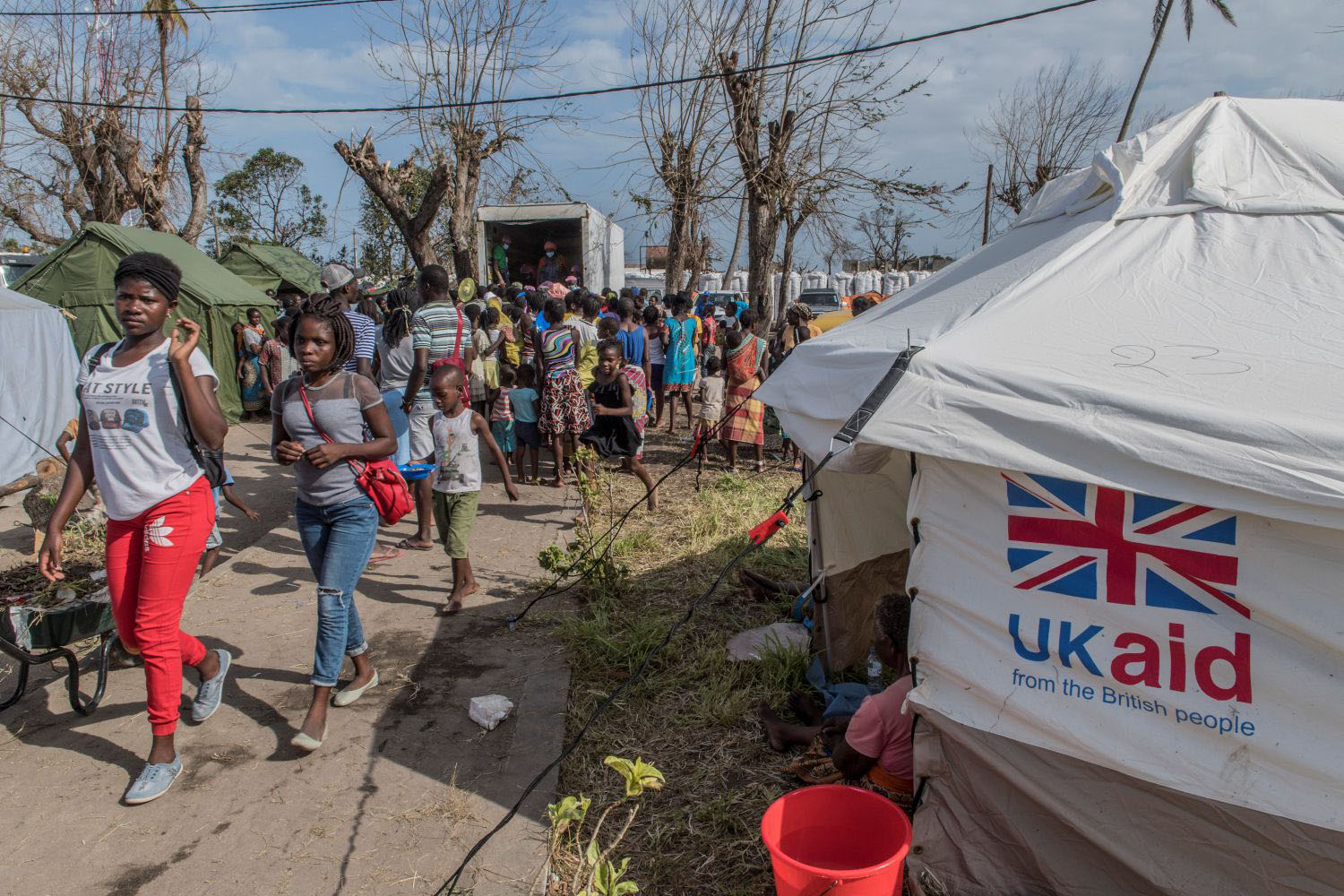
Thumbnail image by: Russell Watkins/DFID