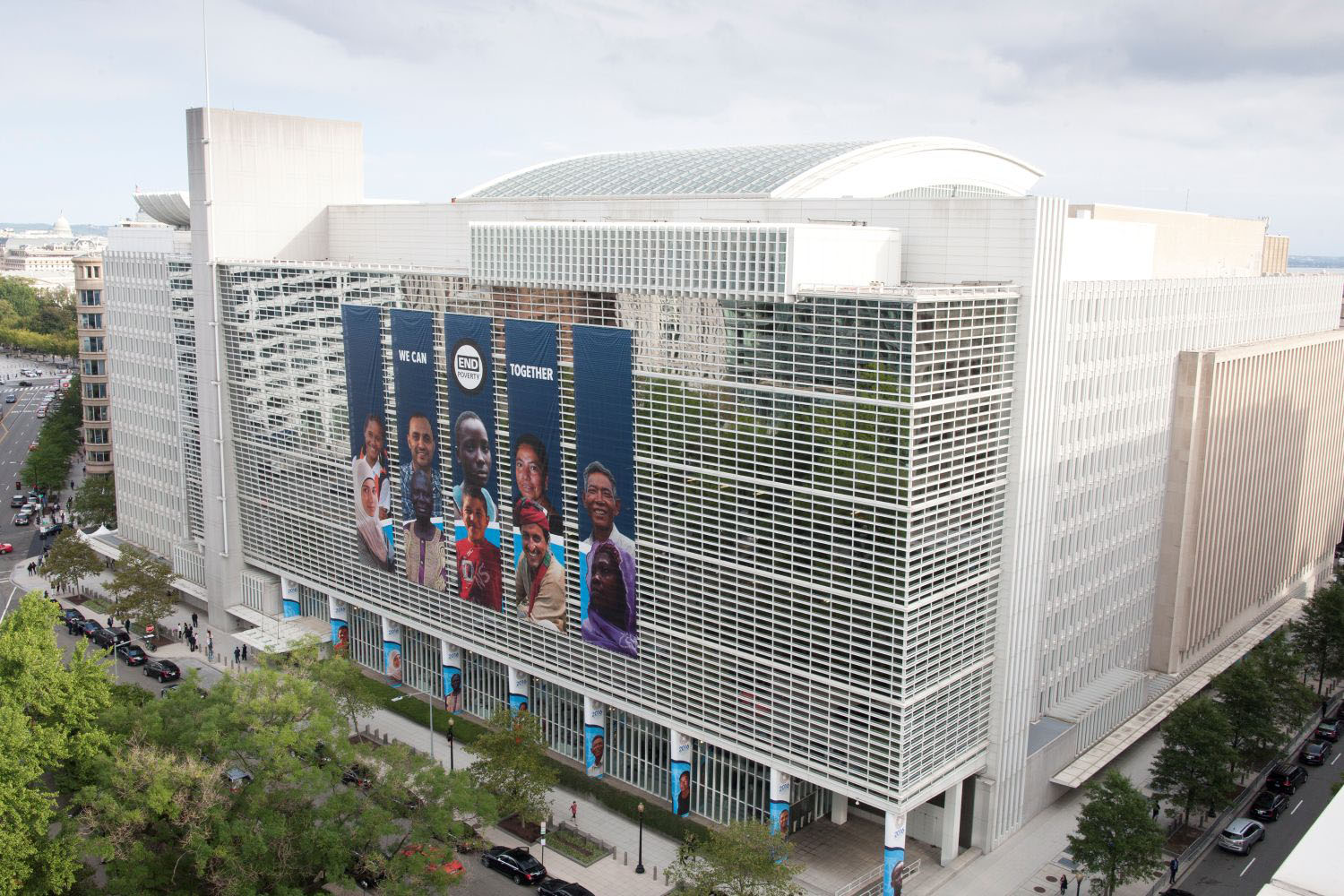
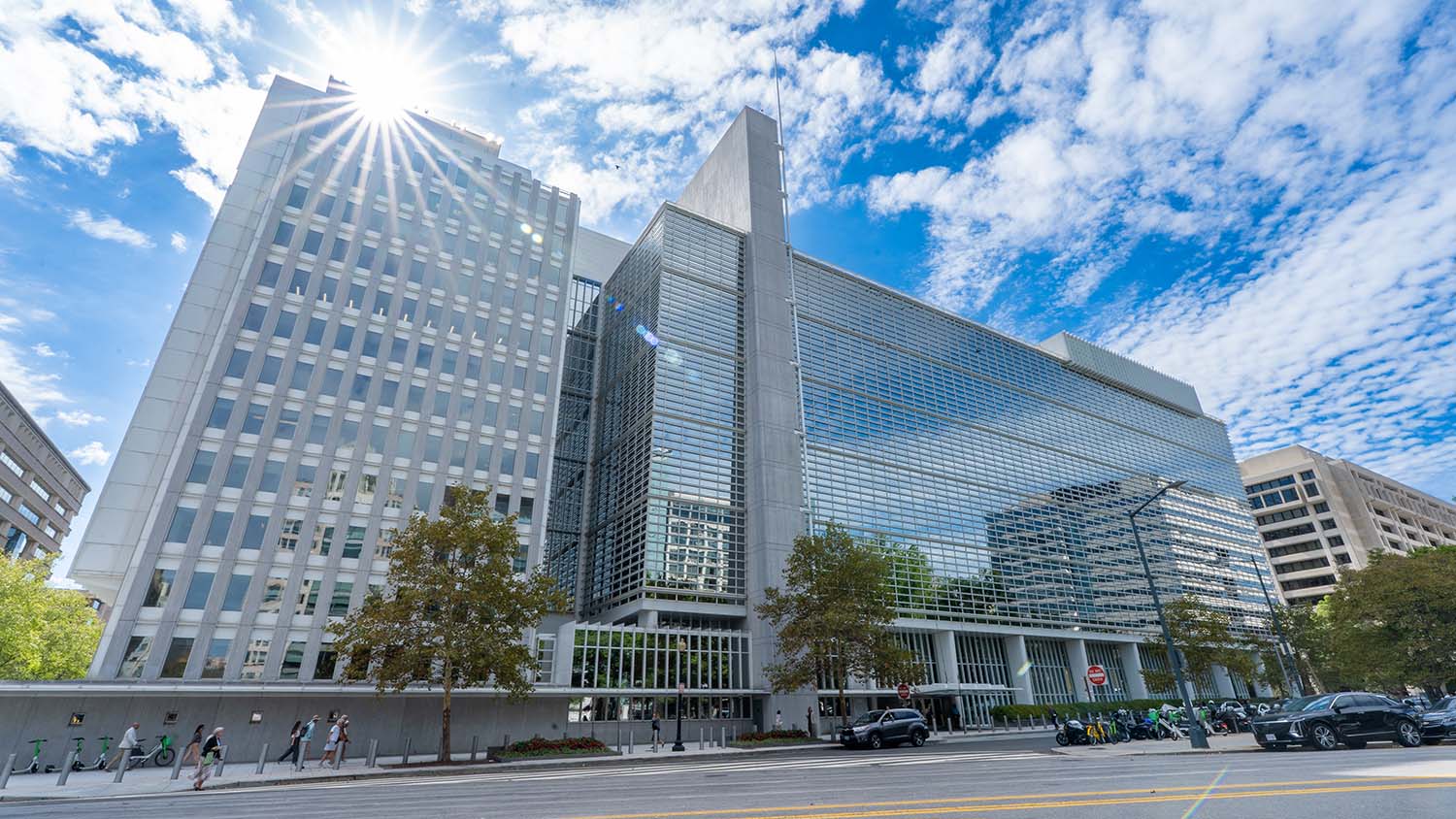
CGD maintains an active program of research and analysis of the World Bank, the largest development institution and a leading source of funds, ideas, and expertise for global poverty alleviation. The Center’s publications in this area include Rescuing the World Bank and The Hardest Job in the World: Five Crucial Tasks for the New President of the World Bank, a report prepared by a 20-person CGD working group including representatives from the private sector, academia, and civil society in both rich countries and the developing world. The group was chaired by CGD President Nancy Birdsall and Devesh Kapur, an associate professor at the University of Texas–Austin and co-editor of a two-volume history of the Bank.
Newest
Popular
Publications
Experts
Initiatives
Multimedia
-
In this CGD Essay, Birdsall and Subramianian argue that the World Bank faces twin crises of relevance and legitimacy in a rapidly changing world. The solution, they argue, is for the bank to become a more active catalyst for generating global public goods and knowledge and a more reluctant lender to governments. The World Bank should move, in effect, from being a bank to being a global development cooperative. The essay suggests specific, practical steps for such reforms.
-
CGD's online survey of views on selecting the World Bank's next president received nearly 700 responses from people representing 71 nations; all world regions; high-, middle- and low-income countries; a variety of professional affiliations; and all adult age groups. In a new working paper analyzing evidence from the survey, CGD senior fellow David Wheeler finds that despite the participants' diversity, they displayed striking uniformity in their preference for an open, competitive selection process, their weighting of selection criteria, and their assessment of potential candidates for president of the World Bank--including the U.S. nominee, Robert Zoellick.
Learn more
-
This CGD working group report offers five practical recommendations for strengthening the International Development Association (IDA)--the World Bank's soft-loan facility for the world's poorest countries--as donors begin replenishment talks that will shape IDA's course from mid-2008 through mid-2011. Among the recommendations: affirm IDA's central role in the international aid system; focus on core tasks; don't hold IDA hostage to broader geopolitical issues; get serious about finding ways to help fragile states; and sharpen incentives for performance.Learn more
-
In this Essay, CGD president Nancy Birdsall describes the World Bank as a global club with a structure close to that of a credit union in which the members are nations. Its mission, as originally conceived–-to promote broadly shared and sustainable global prosperity--serves the common interests of all its country members. In light of this idea of the Bank as a global credit club, Birdsall addresses the issues that arise with respect to its current governance structure and how these issues affect the Bank's legitimacy, effectiveness and relevance in the global system.
-
Does aid to Africa undermine the emergence of a robust African middle class? If so, what can be done about it? In this new working paper, CGD president Nancy Birdsall argues that high and unpredictable aid flows could be making life harder for Africa's small and medium-sized businesses by, for example, inflating wages and making governments less reliant on domestic revenue—and hence less accountable to taxpayers. She urges that donors systematically monitor such impacts in aid-dependent countries and suggests ways that aid could help to bolster Africa's crucial but fragile middle-income groups. Learn more
-
Critics allege that the World Bank is deeply flawed. Yet the world needs a strong World Bank to help manage development and the related global challenges of the 21st century. Do the Bank's shortcomings put its future at risk? If so, can the Bank be rescued? Rescuing the World Bank, a new book that includes a CGD working group report and selected essays edited by CGD president Nancy Birdsall, offers timely perspectives on challenges that are crucial to the Bank’s future success. Learn more
-
It is sometimes claimed that big surges in aid might cause Dutch Disease--an appreciation of the real exchange rate which can slow the growth of a country's exports--and that aid increases might thereby harm a country's long-term growth prospects. In this new working paper CGD senior program associate Owen Barder argues that it is unlikely that a long-term, sustained and predictable increase in aid would, through the impact on the real exchange rate, do more harm than good. Learn more
-
U.S. "development assistance" refers to the transfer of resources from the United States to developing countries and to some strategic allies. It is delivered in the form of money (via loans or grants), contributions of goods (such as food aid), and technical assistance.
Learn more about Rich World, Poor World: A Guide to Global Development
-
This report was prepared by a Working Group convened by the Center for Global Development to identify key priorities the Paul Wolfowitz at the start of his tenure at the World Bank on June 1, 2005. It argues that Wolfowitz's biggest challenge will not be managing the Bank, with its 10,000 staff, but leading its shareholders, the nations of the world. The report offers five bold but practical recommendations for restoring the legitimacy and increasing the effectiveness of the world's largest development institution.
-
-
Critics allege that the World Bank is deeply flawed. Yet the world needs a strong World Bank to help manage development and the related global challenges of the 21st century. Do the Bank's shortcomings put its future at risk? If so, can the Bank be rescued? Rescuing the World Bank, a new book that includes a CGD working group report and selected essays edited by CGD president Nancy Birdsall, offers timely perspectives on challenges that are crucial to the Bank’s future success. Learn more
-
The Burnside and Dollar (2000) finding that aid raises growth in a good policy environment has had an important influence on policy and academic debates. We conduct a data gathering exercise that updates their data from 1970-93 to 1970-97, as well as filling in missing data for the original period 1970-93. We find that the BD finding is not robust to the use of this additional data. (JEL F350, O230, O400)
-
Does aid to Africa undermine the emergence of a robust African middle class? If so, what can be done about it? In this new working paper, CGD president Nancy Birdsall argues that high and unpredictable aid flows could be making life harder for Africa's small and medium-sized businesses by, for example, inflating wages and making governments less reliant on domestic revenue—and hence less accountable to taxpayers. She urges that donors systematically monitor such impacts in aid-dependent countries and suggests ways that aid could help to bolster Africa's crucial but fragile middle-income groups. Learn more
-
*REVISED Version May 2007Recent literature contains many stories of how foreign aid affects economic growth: aid raises growth in countries with good policies, or in countries with difficult economic environments, or mainly outside the tropics, or on average with diminishing returns. The diversity of these results suggests that many are fragile. I test 7 important aid-growth papers for robustness. The 14 tests are minimally arbi-trary, deriving mainly from differences among the studies themselves. This approach investigates the importance of potentially arbitrary specification choices while minimizing arbitrariness in testing choices. All of the results appear fragile, especially to sample expansion.
-
In this CGD Essay, Birdsall and Subramianian argue that the World Bank faces twin crises of relevance and legitimacy in a rapidly changing world. The solution, they argue, is for the bank to become a more active catalyst for generating global public goods and knowledge and a more reluctant lender to governments. The World Bank should move, in effect, from being a bank to being a global development cooperative. The essay suggests specific, practical steps for such reforms.
-
U.S. "development assistance" refers to the transfer of resources from the United States to developing countries and to some strategic allies. It is delivered in the form of money (via loans or grants), contributions of goods (such as food aid), and technical assistance.
Learn more about Rich World, Poor World: A Guide to Global Development
-
This report was prepared by a Working Group convened by the Center for Global Development to identify key priorities the Paul Wolfowitz at the start of his tenure at the World Bank on June 1, 2005. It argues that Wolfowitz's biggest challenge will not be managing the Bank, with its 10,000 staff, but leading its shareholders, the nations of the world. The report offers five bold but practical recommendations for restoring the legitimacy and increasing the effectiveness of the world's largest development institution.
-
A Better Globalization: Legitimacy, Governance, and Reform by Kemal Dervis is a reformist manifesto that argues that gradual institutional change can produce beneficial results if it is driven by an ambitious long-term vision and by a determination to continually widen the limits of the possible.
-
In this paper I set out the economic logic for why good global economic governance matters for reducing poverty and inequality and argue that a step towards better global governance would be better representation of developing countries in global and regional financial institutions.
-
This study brings readers up to date on the complicated and controversial subject of debt relief for the poorest countries of the world.
-
-
Lawrence MacDonald, Vice President, Communications and Policy Outreach Lawrence leads the CGD's policy and communication activities including legislative and civil society outreach, online engagement, media relations, publications and events. He is preoccupied with turning ideas into action.
-
David Wheeler, Senior Fellow David Wheeler leads CGD's work on climate change, which includes assessing the stakes for developing countries, integrating climate change into development assistance, and using public information disclosure to reduce emissions. He is the architect two Web-based carbon monitoring databases, one for all power plants in the world and one for tropical forests.
-
From World Bank to World Development Cooperative
- Oct 15, 2007
In this CGD Essay, Birdsall and Subramianian argue that the World Bank faces twin crises of relevance and legitimacy in a rapidly changing world. The solution, they argue, is for the bank to become a more active catalyst for generating global public goods and knowledge and a more reluctant lender to governments. The World Bank should move, in effect, from being a bank to being a global development cooperative. The essay suggests specific, practical steps for such reforms.
-
It's One World Out There: The Global Consensus on Selecting the World Bank's Next President - Working Paper 123
- Jun 11, 2007
CGD's online survey of views on selecting the World Bank's next president received nearly 700 responses from people representing 71 nations; all world regions; high-, middle- and low-income countries; a variety of professional affiliations; and all adult age groups. In a new working paper analyzing evidence from the survey, CGD senior fellow David Wheeler finds that despite the participants' diversity, they displayed striking uniformity in their preference for an open, competitive selection process, their weighting of selection criteria, and their assessment of potential candidates for president of the World Bank--including the U.S. nominee, Robert Zoellick.
Learn more
-
The World Bank's Work in the Poorest Countries: Five Recommendations for a New IDA
- Jun 11, 2007
This CGD working group report offers five practical recommendations for strengthening the International Development Association (IDA)--the World Bank's soft-loan facility for the world's poorest countries--as donors begin replenishment talks that will shape IDA's course from mid-2008 through mid-2011. Among the recommendations: affirm IDA's central role in the international aid system; focus on core tasks; don't hold IDA hostage to broader geopolitical issues; get serious about finding ways to help fragile states; and sharpen incentives for performance.Learn more
-
The World Bank: Toward a Global Club
- May 22, 2007
In this Essay, CGD president Nancy Birdsall describes the World Bank as a global club with a structure close to that of a credit union in which the members are nations. Its mission, as originally conceived–-to promote broadly shared and sustainable global prosperity--serves the common interests of all its country members. In light of this idea of the Bank as a global credit club, Birdsall addresses the issues that arise with respect to its current governance structure and how these issues affect the Bank's legitimacy, effectiveness and relevance in the global system.
-
Do No Harm: Aid, Weak Institutions, and the Missing Middle in Africa - Working Paper 113
- Mar 8, 2007
Does aid to Africa undermine the emergence of a robust African middle class? If so, what can be done about it? In this new working paper, CGD president Nancy Birdsall argues that high and unpredictable aid flows could be making life harder for Africa's small and medium-sized businesses by, for example, inflating wages and making governments less reliant on domestic revenue—and hence less accountable to taxpayers. She urges that donors systematically monitor such impacts in aid-dependent countries and suggests ways that aid could help to bolster Africa's crucial but fragile middle-income groups. Learn more
-
Rescuing the World Bank
- Sep 5, 2006
Critics allege that the World Bank is deeply flawed. Yet the world needs a strong World Bank to help manage development and the related global challenges of the 21st century. Do the Bank's shortcomings put its future at risk? If so, can the Bank be rescued? Rescuing the World Bank, a new book that includes a CGD working group report and selected essays edited by CGD president Nancy Birdsall, offers timely perspectives on challenges that are crucial to the Bank’s future success. Learn more
-
A Policymakers' Guide to Dutch Disease - Working Paper 91
- Jul 11, 2006
It is sometimes claimed that big surges in aid might cause Dutch Disease--an appreciation of the real exchange rate which can slow the growth of a country's exports--and that aid increases might thereby harm a country's long-term growth prospects. In this new working paper CGD senior program associate Owen Barder argues that it is unlikely that a long-term, sustained and predictable increase in aid would, through the impact on the real exchange rate, do more harm than good. Learn more
-
U.S. Assistance for Global Development
- Jun 15, 2006
U.S. "development assistance" refers to the transfer of resources from the United States to developing countries and to some strategic allies. It is delivered in the form of money (via loans or grants), contributions of goods (such as food aid), and technical assistance.
Learn more about Rich World, Poor World: A Guide to Global Development
-
The Hardest Job in the World: Five Crucial Tasks for the New President of the World Bank
- Jun 1, 2005
This report was prepared by a Working Group convened by the Center for Global Development to identify key priorities the Paul Wolfowitz at the start of his tenure at the World Bank on June 1, 2005. It argues that Wolfowitz's biggest challenge will not be managing the Bank, with its 10,000 staff, but leading its shareholders, the nations of the world. The report offers five bold but practical recommendations for restoring the legitimacy and increasing the effectiveness of the world's largest development institution.
-
A Better Globalization: Legitimacy, Governance, and Reform
- Mar 1, 2005
A Better Globalization: Legitimacy, Governance, and Reform by Kemal Dervis is a reformist manifesto that argues that gradual institutional change can produce beneficial results if it is driven by an ambitious long-term vision and by a determination to continually widen the limits of the possible.
There are no initiatives related to this topic.
-
From the Chicago Tribune
-
From the Financial Times
-
From the Calgary Herald
There are no multimedia items related to this topic.
|
|