The Future of the World Bank

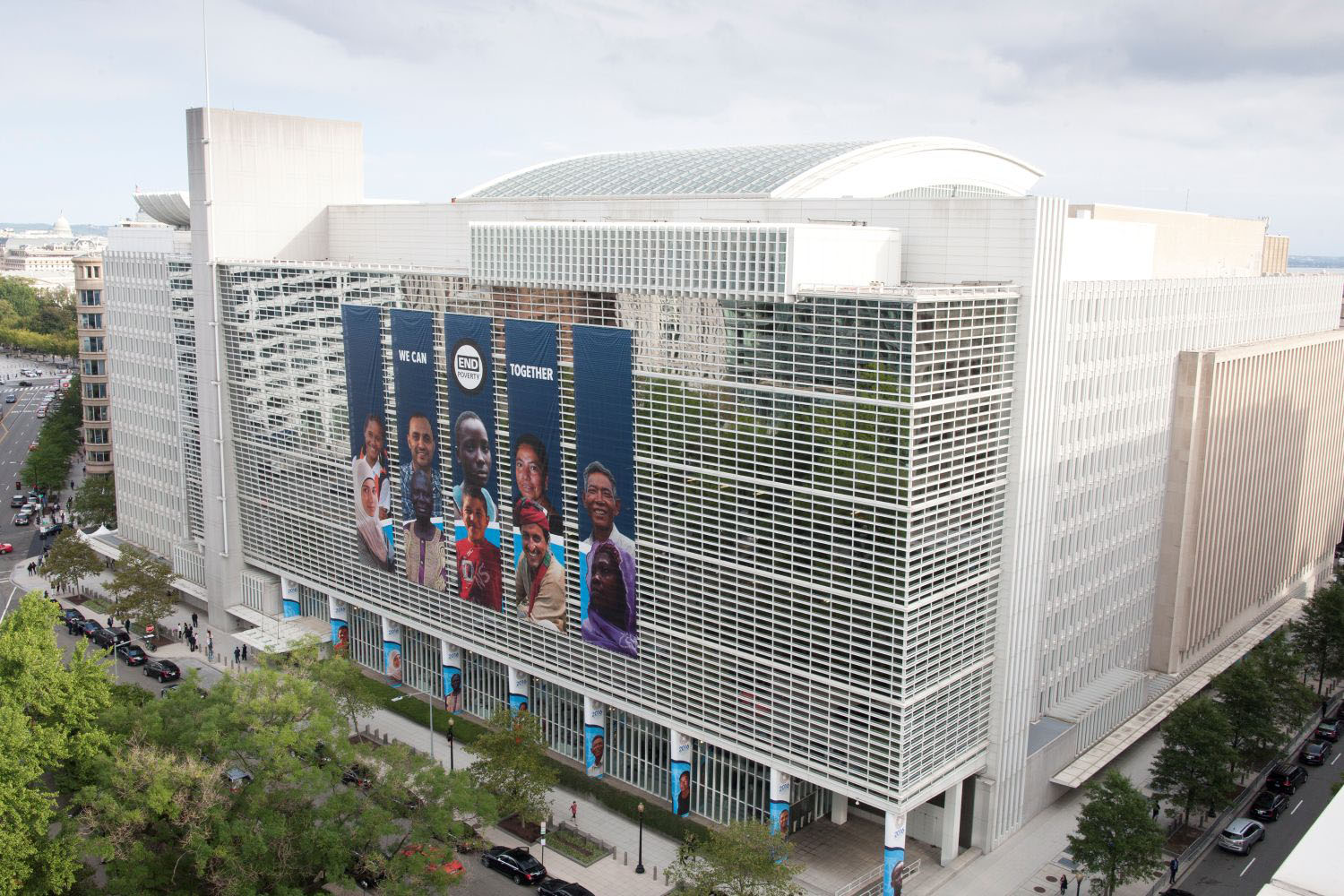
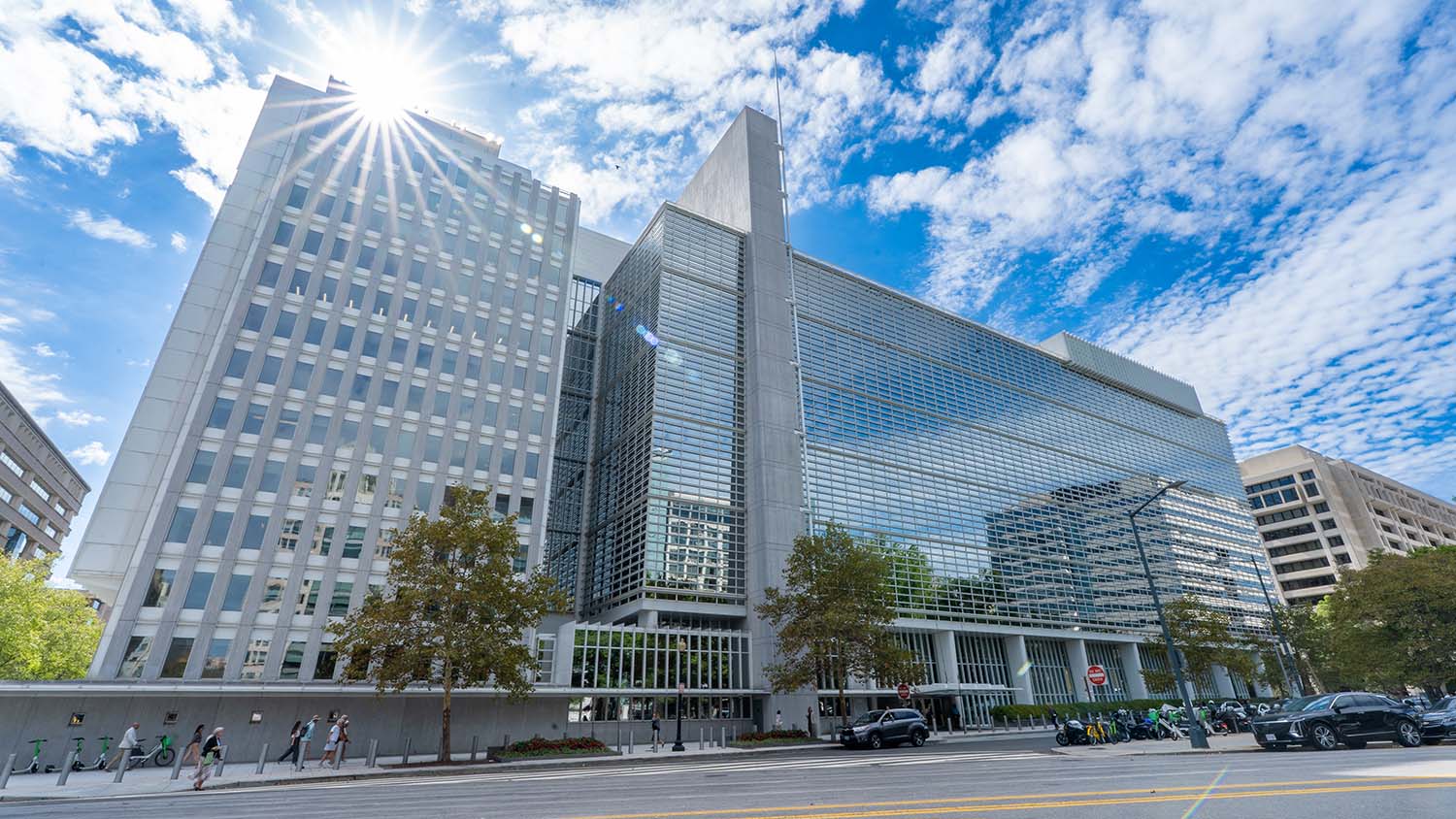
CGD has an active program of research and analysis of the World Bank, the world’s largest development institution and a leading source of funds, ideas and expertise for development. Recent outputs include "The Hardest Job in the World: Five Crucial Tasks for the New President of the World Bank." The report was prepared by a 20-person CGD working group drawn from the private sector, academia, and civil society in rich countries and the developing world, including former ministers of finance and foreign affairs, former U.S. Treasury officials, and former vice presidents of the World Bank. CGD released the group's recommendations on June 1, 2005, the day that Paul Wolfowitz, previously U.S. deputy defense secretary, became president of the World Bank.

The group was co-chaired by CGD President Nancy Birdsall and Non-Resident Fellow Devesh Kapur, an associate professor at the University of Texas at Austin and co-editor of a two-volume history of the Bank.

One of the most controversial issues concerning the Bank's operations is under what circumstances it should disburse grants instead of loans. The working group's recommendation that grants go to the poorest countries rather than to the most indebted is elaborated in a note by former CGD Senior Fellow Steve Radelet, "Grants for the Poorest: How the World Bank Should Distribute Its Funds."

Newest Popular Experts Publications Events Multimedia
  • Good governance and anticorruption are central to the theories and practices of global development today. They are often considered to be the keys to holding inefficient governments accountable for their actions. In this discussion, Professor Catherine Weaver looks at the history of the Bank's governance and anticorruption agenda, the gap between rhetoric and reality, and the political and bureaucratic obstacles, both internal and external, that must be addressed in order for reforms to be implemented.
  • This video contains clips of the World Banks consultation on a new framework for addressing climate change.
  • This half-day CGD conference will bring together leading thinkers and policy makers from developing and donor countries for detailed discussion on the future of the World Bank. The conference concludes with remarks and an open discussion with World Bank president Robert Zoellick.
  • In this CGD Essay, Birdsall and Subramianian argue that the World Bank faces twin crises of relevance and legitimacy in a rapidly changing world. The solution, they argue, is for the bank to become a more active catalyst for generating global public goods and knowledge and a more reluctant lender to governments. The World Bank should move, in effect, from being a bank to being a global development cooperative. The essay suggests specific, practical steps for such reforms.
  • CGD's online survey of views on selecting the World Bank's next president received nearly 700 responses from people representing 71 nations; all world regions; high-, middle- and low-income countries; a variety of professional affiliations; and all adult age groups. In a new working paper analyzing evidence from the survey, CGD senior fellow David Wheeler finds that despite the participants' diversity, they displayed striking uniformity in their preference for an open, competitive selection process, their weighting of selection criteria, and their assessment of potential candidates for president of the World Bank--including the U.S. nominee, Robert Zoellick. Learn more
  • This CGD working group report offers five practical recommendations for strengthening the International Development Association (IDA)--the World Bank's soft-loan facility for the world's poorest countries--as donors begin replenishment talks that will shape IDA's course from mid-2008 through mid-2011. Among the recommendations: affirm IDA's central role in the international aid system; focus on core tasks; don't hold IDA hostage to broader geopolitical issues; get serious about finding ways to help fragile states; and sharpen incentives for performance.Learn more
  • In this Essay, CGD president Nancy Birdsall describes the World Bank as a global club with a structure close to that of a credit union in which the members are nations. Its mission, as originally conceived–-to promote broadly shared and sustainable global prosperity--serves the common interests of all its country members. In light of this idea of the Bank as a global credit club, Birdsall addresses the issues that arise with respect to its current governance structure and how these issues affect the Bank's legitimacy, effectiveness and relevance in the global system.
  • Rescuing the World Bank - Sep 5, 2006
    Critics allege that the World Bank is deeply flawed. Yet the world needs a strong World Bank to help manage development and the related global challenges of the 21st century. Do the Bank's shortcomings put its future at risk? If so, can the Bank be rescued? Rescuing the World Bank, a new book that includes a CGD working group report and selected essays edited by CGD president Nancy Birdsall, offers timely perspectives on challenges that are crucial to the Bank’s future success. Learn more
  • How should the world's largest and most influential development institution address the challenges of the 21st Century? Ten distinguished speakers gathered on the eve of the World Bank/IMF 2005 Annual Meetings to offer fresh ideas. World Bank President Paul Wolfowitz and CGD President Nancy Birdsall before the start of the symposium. Access the proceedings
  • A new CGD report, "The Hardest Job in the World: Five Crucial Tasks For the New World Bank President," identifies key priorities for Paul Wolfowitz at the start of his tenure at the World Bank.
  • Nancy Birdsall, President

    An internationally recognized expert on the impact of rich-country policies on poor people in developing countries, Nancy Birdsall is the author, co-author, or editor of more than a dozen books and over 100 articles in scholarly journals and monographs, published in English and Spanish. Her most recent book is Cash on Delivery: A New Approach to Foreign Aid.

  • Devesh Kapur, Non-Resident Fellow

    Devesh Kapur is the Director of the Centre for Advanced Study of India, he holds the Madan Lal Sobti Professorship for the Study of Contemporary India, and he is an associate professor of political science at the University of Pennsylvania. His research examines local-global linkages in political and economic change in developing countries, particularly India. He also focuses on the role of international institutions and diasporas in development. He is the co-author, with John McHale, of Give Us Your Best and Brightest: The Global Hunt for Talent and Its Impact on the Developing World.

  • Michael Kremer, Non-Resident Fellow

    Michael Kremer is the Gates Professor of Developing Societies in the department of economics at Harvard University, senior fellow at the Brookings Institution, and non-resident fellow at the Center for Global Development. Kremer’s recent research examines education and health in developing countries, immigration, and globalization.

Highlights

Slides from Nancy Birdsall's presentation to the World Bank Executive Directors (PDF) 11/4/2005

RSS
Recent Blog Posts

Experts

Spotlight

Get Updates

Twitter   Facebook   YouTube   RSS   Podcasts