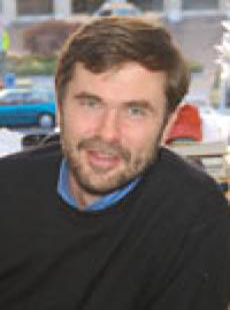
Steve Radelet

Senior Fellow
Email: CGD Alumni
Education: PhD, Harvard University; MPP, Harvard University; BS, Central Michigan University

Steve Radelet was a senior fellow at the Center for Global Development from 2002 to 2010, where he worked on issues related to foreign aid, developing-country debt, economic growth, and trade between rich and poor countries.  Most recently, Steve authored Emerging Africa: How 17 Countries are Leading the Way, a book that examines the positive growth in economic, political, and social policies taking place across Africa.  His research and publications have focused on foreign aid, economic growth, financial crises, and trade policy in developing countries, especially in sub-Saharan Africa and East Asia.  While at CGD, Steve co-authored the working paper Counting Chickens When They Hatch: The Short-Term Effect of Aid Growth and authored Challenging Foreign Aid: A Policymaker’s Guide to the Millennium Challenge Account.  Steven also served as an economic advisor to the Government of Liberia in its debt-reduction efforts and was a founding co-chair of the Modernizing Foreign Assistance Network (MFAN).

Prior to his tenure at CGD, Stevn was deputy assistant secretary of the U.S. Treasury for Africa, the Middle East, and Asia from 2000 to 2002.  In that capacity, he was responsible for developing policies on U.S. financial relations with the countries in these regions, including debt rescheduling and programs with the IMF, World Bank, and other international financial institutions.  From 1990 to 2000 Steve was on the faculty of Harvard University, where he was a fellow at the Harvard Institute for International Development (HIID), director of the Institute's Macroeconomics Program, and a lecturer on economics and public policy.  He has written numerous articles in economics journals and other publications and is co-author of Economics of Development, a leading undergraduate textbook.

Newest Popular CGD Publications Events Multimedia Selected Works
  • In 2008, the United States finished 17th in the Index. Did it do any better in 2009? How did the other wealthy countries fare? To find out, and to understand the data behind the rankings, watch the Webinar that took place on Oct. 20.  The Webinar includes an overview of the Index and the 2009 results from CGD research fellow David Roodman. CGD senior fellow Steve Radelet, a former deputy assistant secretary of Treasury for Africa, the Middle East and Asia, will discuss the implications of the Index results for the ongoing debate over reforming U.S. development policy.
  • Senior fellow Steve Radelet testifies before the House Foreign Affairs Subcommittee on Africa and Global Health about the challenges and opportunities to reform U.S. foreign assistance to Africa.
  • Senior fellow Steve Radelet testifies before the Senate Foreign Relations Subcommittee on International Development, Foreign Assistance, Economic Affairs, and International Environmental Protection.
  • Director of the Center for Public Leadership at the John F. Kennedy School of Government at Harvard University, editor-at-large at U.S. News & World Report, and a senior political analyst for CNN, David Gergen joined CGD president Nancy Birdsall, and CGD senior fellows who authored essays in our recent book, The White House and the World: A Global Development Agenda for the Next U.S. President, for a lively discussion of the prospects for improved U.S. development policy under President Barack Obama.
  • The Millennium Challenge Corp. (MCC) has received wide praise for its innovative approaches to aid allocation and delivery but has not yet reached its full potential. Now, with the transition to a new administration, the MCC must take bold steps to achieve greater effectiveness, clarity of purpose, and integration with the broader U.S. foreign assistance framework. CGD analysts Sheila Herrling, Steve Radelet, and Molly Kinder offer timely suggestions, including introducing smaller, multiple compacts, reorienting the Threshold Program, and focusing exclusively on low-income countries.
  • We will examine trends in economic growth and other development indicators around the world since 1965, with some reference to broad patterns since 1820. We will briefly review the concepts underlying the standard Solow model of economic growth and other measures of development. We will explore the relationship between growth, poverty, and equity. We will examine the evolution of the developing-country debt crisis. We will look at current controversies and debates about foreign Assistance. We will examine the financial crises that affected several emerging markets in the late 1990s. We will examine the relationships between trade, trade policy, and development.
  • In this video from the December 9, 2008, event with USAID administrator Henrietta Fore, CGD senior fellow Steve Radelet talks with her about the past year she spent in office and her recommendations for the next administrator of USAID.
  • Total U.S. development assistance has fallen 22 percent since 2005 from $27.9 billion to $21.8 billion in 2007. In real terms, this was the smallest amount since 2002, excluding assistance to Iraq, Afghanistan, and HIV/AIDS programs. Senior fellow Steve Radelet and his coauthors examine the decline, and ask whether President Bush's pledge to double assistance to Africa is likely to be realized or not.
  • The MCA Monitor team presents its predictions for the MCC's selection of countries eligible to apply for funding in 2009. Steve Radelet and Amy Crone take a hard look at the tough choice the MCC has to make, and they offer suggestions to help the MCC to weather a tight budget and political transition, to increase transparency, and clarify criteria for Threshold Program elegibility.
  • This ninth MCA Monitor Report from the Field is a snapshot-in-time of El Salvador’s program in the early phases of its implementation, during a year in which the Millennium Challenge Corporation (MCC) is under pressure to increase and accelerate disbursements, demonstrate tangible impacts, and substantiate the country-driven model as a viable alternative to traditional U.S. government foreign assistance. El Salvador’s experience highlights the challenges of balancing country ownership and oversight as well as managing procurement and expectations. The report suggests solutions to pressing questions related to country ownership, the consultative process, donor coordination, aid effectiveness, and transparency.
  • U.S. Assistance to Africa: A Call for Foreign Aid Reform--Testimony for the House Foreign Affairs Subcommittee on Africa and Global Health - Apr 20, 2009
    Senior fellow Steve Radelet testifies before the House Foreign Affairs Subcommittee on Africa and Global Health about the challenges and opportunities to reform U.S. foreign assistance to Africa.
  • USAID in the 21st Century: What Do We Need for the Tasks at Hand? Testimony for the Senate Foreign Relations Subcommittee on International Development, Foreign Assistance, Economic Affairs, and International Environmental Protection - Mar 31, 2009
    Senior fellow Steve Radelet testifies before the Senate Foreign Relations Subcommittee on International Development, Foreign Assistance, Economic Affairs, and International Environmental Protection.
  • From Innovation to Impact: Next Steps for the Millennium Challenge Corporation - Jan 16, 2009
    The Millennium Challenge Corp. (MCC) has received wide praise for its innovative approaches to aid allocation and delivery but has not yet reached its full potential. Now, with the transition to a new administration, the MCC must take bold steps to achieve greater effectiveness, clarity of purpose, and integration with the broader U.S. foreign assistance framework. CGD analysts Sheila Herrling, Steve Radelet, and Molly Kinder offer timely suggestions, including introducing smaller, multiple compacts, reorienting the Threshold Program, and focusing exclusively on low-income countries.
  • Economic Growth and Development in Low-Income Countries (Syllabus) - Jan 14, 2009
    We will examine trends in economic growth and other development indicators around the world since 1965, with some reference to broad patterns since 1820. We will briefly review the concepts underlying the standard Solow model of economic growth and other measures of development. We will explore the relationship between growth, poverty, and equity. We will examine the evolution of the developing-country debt crisis. We will look at current controversies and debates about foreign Assistance. We will examine the financial crises that affected several emerging markets in the late 1990s. We will examine the relationships between trade, trade policy, and development.
  • What's Behind the Recent Declines in U.S. Foreign Assistance? - Dec 8, 2008
    Total U.S. development assistance has fallen 22 percent since 2005 from $27.9 billion to $21.8 billion in 2007. In real terms, this was the smallest amount since 2002, excluding assistance to Iraq, Afghanistan, and HIV/AIDS programs. Senior fellow Steve Radelet and his coauthors examine the decline, and ask whether President Bush's pledge to double assistance to Africa is likely to be realized or not.
  • Round Six of the MCA: Which Countries Are Most Likely to Be Selected for FY2009? - Nov 24, 2008
    The MCA Monitor team presents its predictions for the MCC's selection of countries eligible to apply for funding in 2009. Steve Radelet and Amy Crone take a hard look at the tough choice the MCC has to make, and they offer suggestions to help the MCC to weather a tight budget and political transition, to increase transparency, and clarify criteria for Threshold Program elegibility.
  • MCA Monitor El Salvador Report from the Field - Sep 3, 2008
    This ninth MCA Monitor Report from the Field is a snapshot-in-time of El Salvador’s program in the early phases of its implementation, during a year in which the Millennium Challenge Corporation (MCC) is under pressure to increase and accelerate disbursements, demonstrate tangible impacts, and substantiate the country-driven model as a viable alternative to traditional U.S. government foreign assistance. El Salvador’s experience highlights the challenges of balancing country ownership and oversight as well as managing procurement and expectations. The report suggests solutions to pressing questions related to country ownership, the consultative process, donor coordination, aid effectiveness, and transparency.
  • The White House and the World: A Global Development Agenda for the Next U.S. President - Aug 22, 2008
    The White House and the World: A Global Development Agenda for the Next U.S. President shows how modest changes in U.S. policies could greatly improve the lives of poor people in developing countries, thus fostering greater stability, security, and prosperity globally and at home. Center for Global Development experts offer fresh perspectives and practical advice on trade policy, migration, foreign aid, climate change and more. In an introductory essay, CGD President Nancy Birdsall explains why and how the next U.S. president must lead in the creation of a better, safer world.
  • U.S. Foreign Assistance for the Twenty-first Century (White House and the World Policy Brief) - Aug 22, 2008
    Meeting today’s foreign policy challenges requires a new vision of American global leadership based on the strength of our core values, ideas, and ingenuity. It calls for an integrated foreign policy that promotes our ideals, enhances our security, helps create economic and political opportunities for people around the world, and restores America’s image abroad. We cannot rely exclusively or even primarily on defense and security to meet these goals. CGD senior policy analyst Sheila Herrling and senior fellow Steve Radelet argue instead that we must make greater use of all the tools of statecraft, including diplomacy, trade, investment, intelligence, and a strong and effective foreign assistance strategy.
  • New Day, New Way: U.S. Foreign Assistance for the 21st Century - Jun 10, 2008
    New Day, New Way: U.S. Foreign Assistance for the 21st Century calls on the next American president, Congress, policymakers and the American people to overhaul how the U.S. helps poor people in developing countries. Among the recommended steps: a new national foreign assistance strategy and a new Foreign Assistance Act to replace the outdated framework that President Kennedy signed nearly 50 years ago. CGD senior fellow Steve Radelet is a co-chair of the authoring group, the Modernizing Foreign Assistance Network.
  • Emerging Africa: The Unheralded Economic Turnaround in (half of) Africa - Sep 18, 2009

    Emerging Africa: The Unheralded Economic Turnaround in (half of) Africa with Dr. Steven Radelet, Senior Fellow, Center for Global Development

  • Congressional Hearing: U.S. Assistance to Africa - Apr 23, 2009

    DATE: Thursday, April 23, 2009 TIME: 11:30 a.m. SUBJECT: U.S. Assistance to Africa: A Call for Foreign Aid Reform WITNESSES: Panel I Mr. Earl Gast Senior Deputy Assistant Administrator Bureau for Africa United States Agency for International Development Panel II Ousmane Badiane, Ph.D. Africa Director International Food Policy Research Institute Steven Radelet, Ph.D. Senior Fellow Center for Global Development Meredeth Turshen, D. Phil Professor Edward J. Bloustein School of Planning and Public Policy Rutgers University Mr. Bill O'Keefe Senior Director of Policy and Advocacy Catholic Relief Services

  • Congressional Hearing: USAID in the 21st Century - Apr 1, 2009

    USAID IN THE 21ST CENTURY HEARING before the COMMITTEE ON FOREIGN RELATIONS UNITED STATES SENATE ONE HUNDRED ELEVENTH CONGRESS FIRST SESSION Wednesday, April 1, 2009 Time: 9:30 A.M. Place: 419 Dirksen Senate Building

  • The 2008 Commitment to Development Ideas in Action Award - Mar 17, 2009

    Please join us in honoring ONE, the 2008 winner of the Commitment to Development Ideas in Action Award, sponsored jointly by the Center for Global Development (CGD) and Foreign Policy magazine. ONE is an advocacy organization that raised awareness about global poverty during the 2008 U.S. presidential elections. Through its ONE Vote '08 initiative, ONE mobilized 2 million supporters to sign petitions, raise awareness in their communities, and encourage the presidential candidates to explain how they would improve U.S. policies that affect poor people in developing countries. Following the award presentation, we will have a short discussion on how ONE and others can ensure global development remains part of America’s political discourse in the Obama administration and 111th Congress.

  • CGD Special Discussion with David Gergen on Obama's Global Development Policy - Jan 16, 2009
    Join Nancy Birdsall, David Gergen, and CGD senior fellows who are authors of essays in our newest book, The White House and the World: A Global Development Agenda for the Next U.S. President , for a lively discussion of the prospects for improved U.S. development policy under President Barack Obama. As you know, David Gergen has been an influential participant in American public life for 30 years. A best-selling author and advisor to presidents Reagan, Nixon, Ford and Clinton, David is currently director of the Center for Public Leadership at the John F. Kennedy School of Government at Harvard University, editor-at-large at U.S. News & World Report, and a senior political analyst for CNN.
  • A Conversation with Ambassador John Danilovich: Transition and the MCC - Jan 13, 2009

    Join us for a conversation with Millennium Challenge Corporation (MCC) CEO John Danilovich as he prepares to pass stewardship over the MCC to a new Administration. In his introductory remarks and subsequent dialogue with CGD Senior Fellow Steve Radelet, Ambassador Danilovich will reflect upon his role and experiences in leading and shaping the agency which marks its fifth anniversary in January. He will share his views on both the challenges and opportunities of implementing what many call “one of the most promising innovations in foreign aid” and will reflect on how the MCC fits into the broader landscape of modernizing U.S. foreign assistance, a stated priority for the incoming Obama Administration. We are delighted to host Ambassador Danilovich on the “eve” of his departure and to both congratulate him for his many successes as well as explore with him the unfinished agenda for the new team to carry forward.

  • Economic Development and State Building - Jan 8, 2009

    The multifaceted nature of current and emerging global security challenges requires a judicious and balanced use of development, diplomacy and defense--the 3Ds. United States' leadership in ensuring the success of global efforts to address poverty, protect the environment and safeguard human rights is critical. Enhanced living standards and freedom from fear are necessary conditions for the creation of secure and prosperous societies. This panel will evaluate U.S. programs to promote economic development in fragile environments, analyze policy options for sustainable outcomes and examine institutional mechanisms that could bolster coordination and improve effectiveness.

  • A Conversation with Henrietta Fore - Dec 9, 2008

    Join us for an intimate conversation with Director of U.S. Foreign Assistance and USAID Administrator Henrietta Fore as she prepares to pass her torch of elevating development and modernizing foreign assistance to a new Administration. In a dialogue moderated by CGD Senior Fellow Steve Radelet, she will reflect upon her role and experiences as part of the Bush Administration, from her most significant initiatives and accomplishments to the unfinished agenda for the new team to carry forward. She will share her views on both the challenges and opportunities of implementing a reform agenda for U.S. foreign assistance in the coming years, from managing the impact of the financial crisis to navigating future reform efforts. As we all prepare for the upcoming transition to a new Administration, there is much to learn from the experiences of Director and Administrator Fore.

  • Which Countries Will the Millennium Challenge Corporation Choose for Fiscal Year 2009? - Dec 2, 2008

    On December 11th, the U.S. Millennium Challenge Corporation (MCC) will announce which countries will be eligible to apply for funding in 2009. With funding tight, few new countries passing the eligibility indicators test, twelve of eighteen countries with signed MCC compacts failing the indicators test, and an uncertain future in the new administration, this year's selection round will both test the MCC's adherence to its principles and perhaps set new precedents. CGD's MCA Monitor team took a hard look at tough choices and predicts which countries the MCC Board is likely to choose for 2009 in a new paper titled "Round Six of the MCA". This event features a discussion with Steve Radelet, Senior Fellow at CGD, who will present the forecast and highlight the key issues the Board will face this year.

  • Perspectives on the AIDS Pandemic and the Importance of Continuing Our Commitment - Dec 1, 2008

    At this critical juncture of the global economic crisis, it is important to secure the vigorous commitment of the public health community, the US administration, Congress, and the US public to sustain the US investment in the AIDS pandemic. World AIDS Day presents an opportunity to connect with the experience of communities living with HIV, celebrate what has been accomplished, and face the challenge of ensuring the most effective use of resources to address the challenge of the AIDS pandemic over the long term.

  • 2009 Commitment to Development Index Webinar (slidecast) - Oct 21, 2009
    In 2008, the United States finished 17th in the Index. Did it do any better in 2009? How did the other wealthy countries fare? To find out, and to understand the data behind the rankings, watch the Webinar that took place on Oct. 20.  The Webinar includes an overview of the Index and the 2009 results from CGD research fellow David Roodman. CGD senior fellow Steve Radelet, a former deputy assistant secretary of Treasury for Africa, the Middle East and Asia, will discuss the implications of the Index results for the ongoing debate over reforming U.S. development policy.
  • CGD Special Discussion with David Gergen on Obama's Global Development Policy (Event Video) - Jan 17, 2009
    Director of the Center for Public Leadership at the John F. Kennedy School of Government at Harvard University, editor-at-large at U.S. News & World Report, and a senior political analyst for CNN, David Gergen joined CGD president Nancy Birdsall, and CGD senior fellows who authored essays in our recent book, The White House and the World: A Global Development Agenda for the Next U.S. President, for a lively discussion of the prospects for improved U.S. development policy under President Barack Obama.
  • A Conversation with USAID Administrator Henrietta Fore (Event) - Dec 9, 2008
    In this video from the December 9, 2008, event with USAID administrator Henrietta Fore, CGD senior fellow Steve Radelet talks with her about the past year she spent in office and her recommendations for the next administrator of USAID.
  • New Day, New Way: U.S. Foreign Assistance for the 21st Century (Event) - Jun 10, 2008
    In this video, the the Modernizing Foreign Assistance Network presents their “New Day, New Way: U.S. Foreign Assistance for the 21st Century” report to a standing-room-only audience of policy makers, NGOs and nonprofits.
  • The Future of Foreign Aid (Event) - May 8, 2008
    At a recent luncheon hosted by InterAction, The Future of Foreign Aid, Center for Global Development senior fellow Steve Radelet discusses ways the next administration can improve U.S. foreign aid.
  • Liberia on the Move (Interview) - Apr 4, 2008
    Senior fellow Steve Radelet introduces CGD's event on Friday April 11, 2008: "Liberia on the Move: Economic Growth, Debt Relief, and Poverty Reduction."

RSS
Recent Blog Posts

Multimedia

In the News

Congressional Testimony

Topics

Current Initiatives