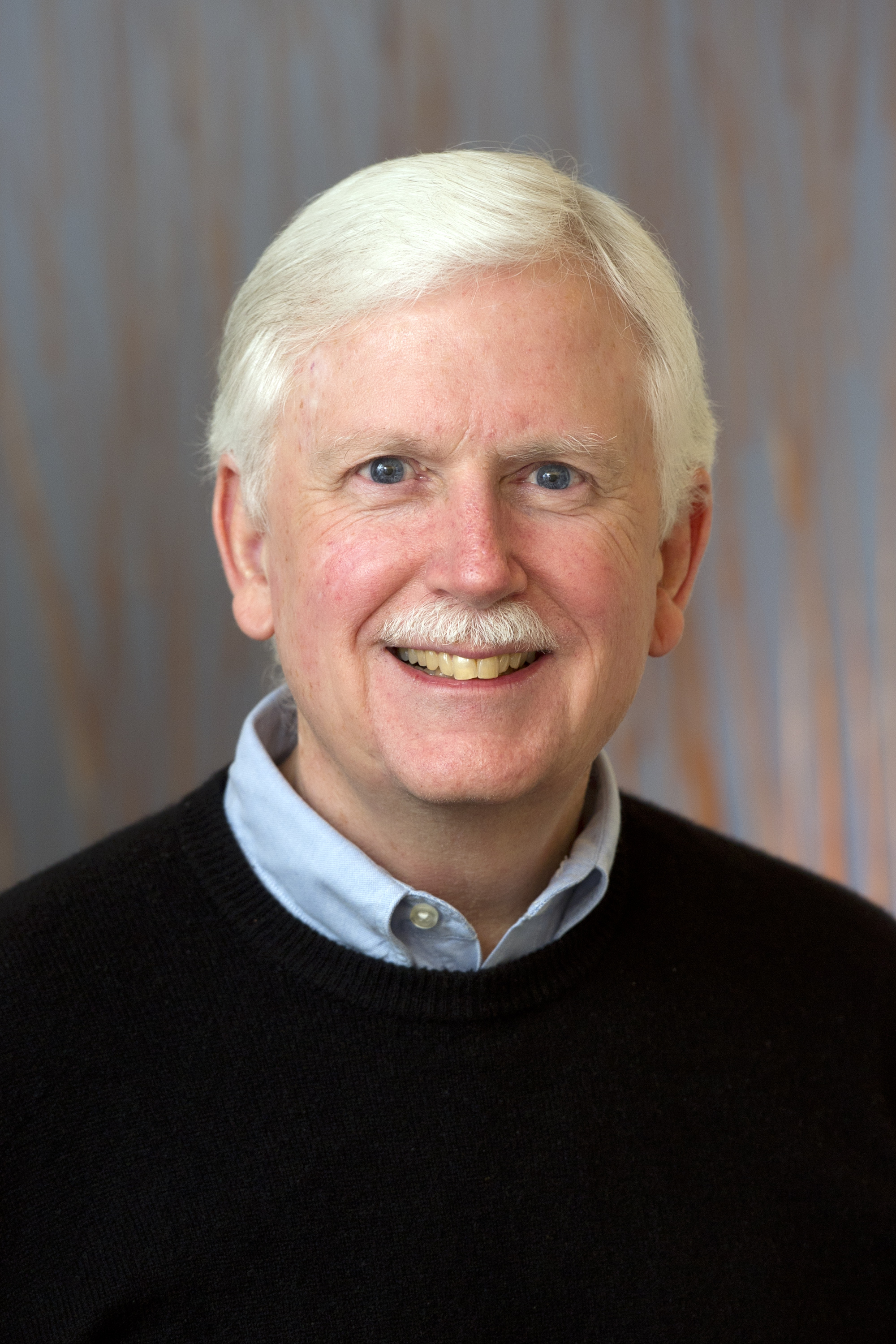
David Wheeler

Senior Fellow
Education:

PhD, Massachusetts Institute of Technology (1974); BA, Princeton University (1968)

Media Contact: Ben Edwards

David Wheeler is a Senior Fellow at the Center for Global Development, where he works on issues related to climate change, natural resource conservation, African infrastructure development, sustainable development indicators and the allocation of development aid. From 1993-2006, as a Lead Economist in the World Bank's Development Research Group, he directed a team that worked on environmental policy and research issues in collaboration with policymakers and academics in Brazil, Colombia, Mexico, China, India, Indonesia, Philippines, Vietnam, Bangladesh, Ghana and other developing countries. His team focused particularly on reducing pollution through public information disclosure, in collaboration with the environment ministries of China, Indonesia and the Philippines. He also worked on priority-setting for country lending, grants and technical assistance with the World Bank's Vice Presidency for Operations Policy and Country Services, the World Bank's Environment Department, and the Global Environment Facility. During his last two years at the Bank, he and his colleagues initiated a climate change program in the Development Research Group, as well as collaborating with the Bank's Africa Region on a cost-effective strategy for road network upgrading in Sub-Saharan Africa.

After completing his PhD in 1974, David taught economics for two years at the National University of Zaire in Kinshasa. He joined the economics faculty at Boston University in 1976, and taught there until he joined the World Bank in 1990. While on the BU faculty, he was a visiting professor in MIT's Department of Urban Studies and Planning (1978-79), a co-founder and principal of the Boston Institute for Developing Economies (1987-1990), and Jakarta field director of the Development Studies Project for BAPPENAS, Indonesia's Planning Ministry (1987-1989).

Newest Popular CGD Publications Events Multimedia Selected Works
  • Financing Forest Conservation to Combat Global Warming: Keys to Success at Copenhagen - Nov 18, 2009

    Forest clearing in developing countries is an enormous contributor to global warming, accounting for about 15% of annual greenhouse gas emissions. The Bali Action Plan seeks ways to reward countries for reducing these emissions--an agenda known as REDD (Reducing Emissions from Deforestation and Forest Degradation). Effective implementation of REDD is an intense topic of discussion in the negotiations leading up to Copenhagen. Many observers envision financial flows in the billions of dollars per year, and substantial pilot efforts are already being sponsored by UN-REDD, the World Bank's Forest Carbon Partnership Facility (FCPF), and the Norwegian International Climate and Forest Initiative.

  • Congressional Hearing: From L'Aquila to Copenhagen: Climate Change and Vulnerable Societies - Jul 23, 2009

    SUBCOMMITTEE ON ASIA, THE PACIFIC AND THE GLOBAL ENVIRONMENT Eni F. H. Faleomavaega (D-AS), Chairman

  • The Human Footprint on Climate - Jun 23, 2009

    As part of the "Demographics and Development in the 21st Century" series, CGD Senior Fellow David Wheeler will summarize the cross-country research he conducted with Dan Hammer on the economics of population policy for carbon emissions reduction. Wheeler includes assessments of the effects of family planning and female education on birth rates. Their global results indicate that carbon mitigation as a result of population policy has costs comparable to those of the least costly clean technology options. They also find that family planning and female education have very different carbon abatement economics across countries, so cost-effective policy may require careful targeting. UN Foundation's Timothy Wirth will offer comments.

  • CGD Special Discussion with David Gergen on Obama's Global Development Policy - Jan 16, 2009
    Join Nancy Birdsall, David Gergen, and CGD senior fellows who are authors of essays in our newest book, The White House and the World: A Global Development Agenda for the Next U.S. President , for a lively discussion of the prospects for improved U.S. development policy under President Barack Obama. As you know, David Gergen has been an influential participant in American public life for 30 years. A best-selling author and advisor to presidents Reagan, Nixon, Ford and Clinton, David is currently director of the Center for Public Leadership at the John F. Kennedy School of Government at Harvard University, editor-at-large at U.S. News & World Report, and a senior political analyst for CNN.
  • Third Annual Richard H. Sabot Lecture - Jun 26, 2008

    The Center for Global Development is hosting its third annual Richard H. Sabot Lecture, in memory of Dick Sabot, a friend, co-author, and founding member of CGD's board of directors. We are honored to have Lord Nicholas Stern, IG Patel Professor of Economics at the London School of Economics and author of the Stern Review, deliver this year's lecture, entitled "The Economics of a Global Deal on Climate Change." CGD President Nancy Birdsall will host and serve as moderator for a discussion following the talk. A limited number of seats are currently available for this invitation-only event. Reservations will be accepted until we reach capacity. Date and time: Thursday, June 26, 2008; 5:00pm--6:30pm; followed by a reception Location: 1750 Massachusetts Avenue, NW, (Peter G. Peterson Institute for International Economics), Washington, DC. (Metro: Red Line, Dupont Circle)

  • Congressional Hearing: Examining the Administration’s Proposal to Establish a Multilateral Clean Technology Fund - Jun 5, 2008

    Subcommittee on Domestic and International Monetary Policy, Trade, and Technology Hearing Examining the Administration’s Proposal to Establish a Multilateral Clean Technology Fund Thursday, June 5, 2008, 1:30 p.m., 2128 Rayburn House Office Building Witness List & Prepared Testimony: Panel 1 The Honorable David H. McCormick, Under Secretary for International Affairs, U.S. Department of Treasury Panel 2 Mr. Brent Blackwelder, President, Friends of the Earth Mr. David Wheeler, Senior Fellow, Center for Global Development Mr. Jacob Werksman, Program Director, Institutions and Governance Program, World Resources Institute Dr. Andrew Deutz, Director of International Institutions, The Nature Conservancy Available Member Statements: Printed Hearing: The printed version of this hearing will be posted as soon as it is available.

  • Climate Change Post-Bali: Assessing the Prospects for Success - Feb 4, 2008

    In the wake of December's UN Climate Change Conference in Indonesia, our panel will consider the next stages of international climate negotiations, discuss current efforts in both the developed and developing world to reduce greenhouse gas emissions, and assess the prospects and potential for a successful response to global warming. Specific topics will include the state of global, U.S., and Chinese climate policy, trends in renewable energy, and the role of energy efficiency. Following brief presentations by each of the panelists, the floor will be opened for an informal Q&A session.

  • Power and Roads to Africa: A Tanzanian Perspective - Dec 14, 2007

    President Kikwete will offer his perspective on infrastructure obstacles to growth in Tanzania, including how the donor community, private sector, and African governments can work together to find new and innovative ways to bring power and roads to Africa. The president’s remarks will be followed by a roundtable discussion with experts on African economic development.

  • Who’s Doing Worst on Climate? Ranking the Rich and the BRICs (Brazil, Russia, India and China): Results from the 2007 Commitment to Development Index - Oct 15, 2007

    Each year the Center for Global Development's Commitment to Development Index ranks 21 rich countries on their dedication to policies that benefit the five billion people living in poorer nations. This year the focus is on the environment component, which includes scores for policies and practices related to climate change. Find out how the U.S. and other rich countries stack up—and how they compare to Brazil, Russia, India and China (the so-called BRICs) in their global environmental policies. The overall rankings for the 21 countries in the 2007 CDI also will be announced.

Non-CGD Publications

RSS
Recent Blog Posts

Multimedia

In the News

Congressional Testimony

Topics